
Gelco Chimney Sweep in Energy Corridor: A Homeowner’s Guide
If a chimney company mentions Gelco products but can’t tell you which specific formulation they’re using or why, that’s a red flag worth noting before you sign anything. Gelco makes professional-grade chemical treatments for creosote – the tar-like residue that builds up inside a flue – and those products have specific jobs they’re designed to do. They are not a shortcut around mechanical sweeping, and they are not a magic spray that fixes a neglected chimney. Knowing the difference protects your wallet and, more importantly, your home.
This guide explains what Gelco treatments actually address, when they genuinely help, and what to ask before approving any chemical application. If you’d rather hand the whole thing to someone who works with these materials regularly, call (844) 625-7014 and we’ll set up a free estimate.
What do Gelco chimney sweep products actually do?
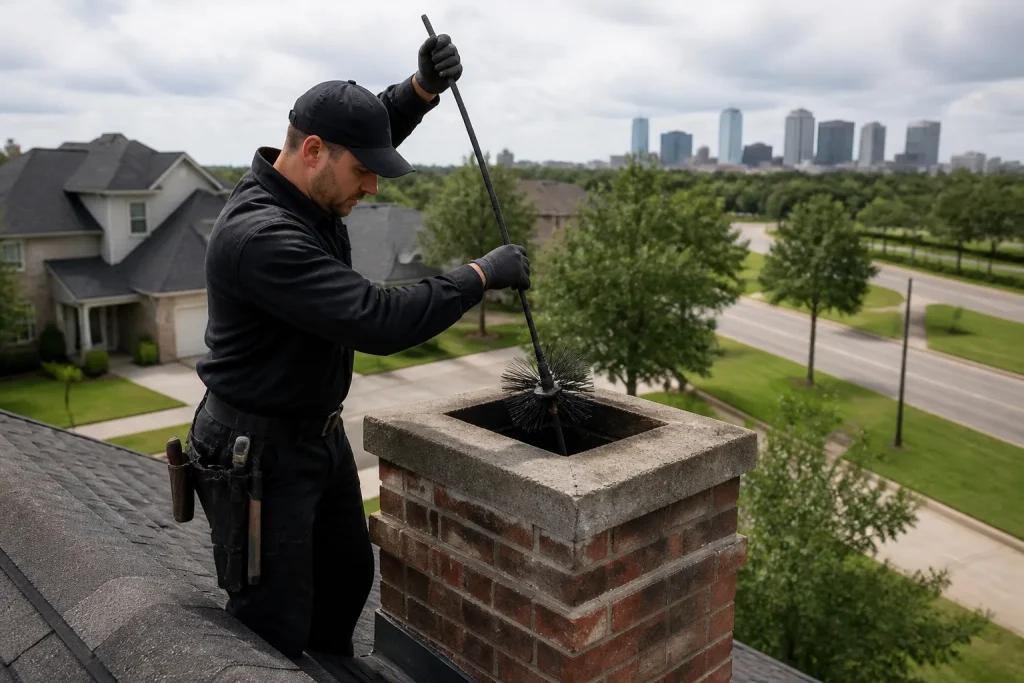
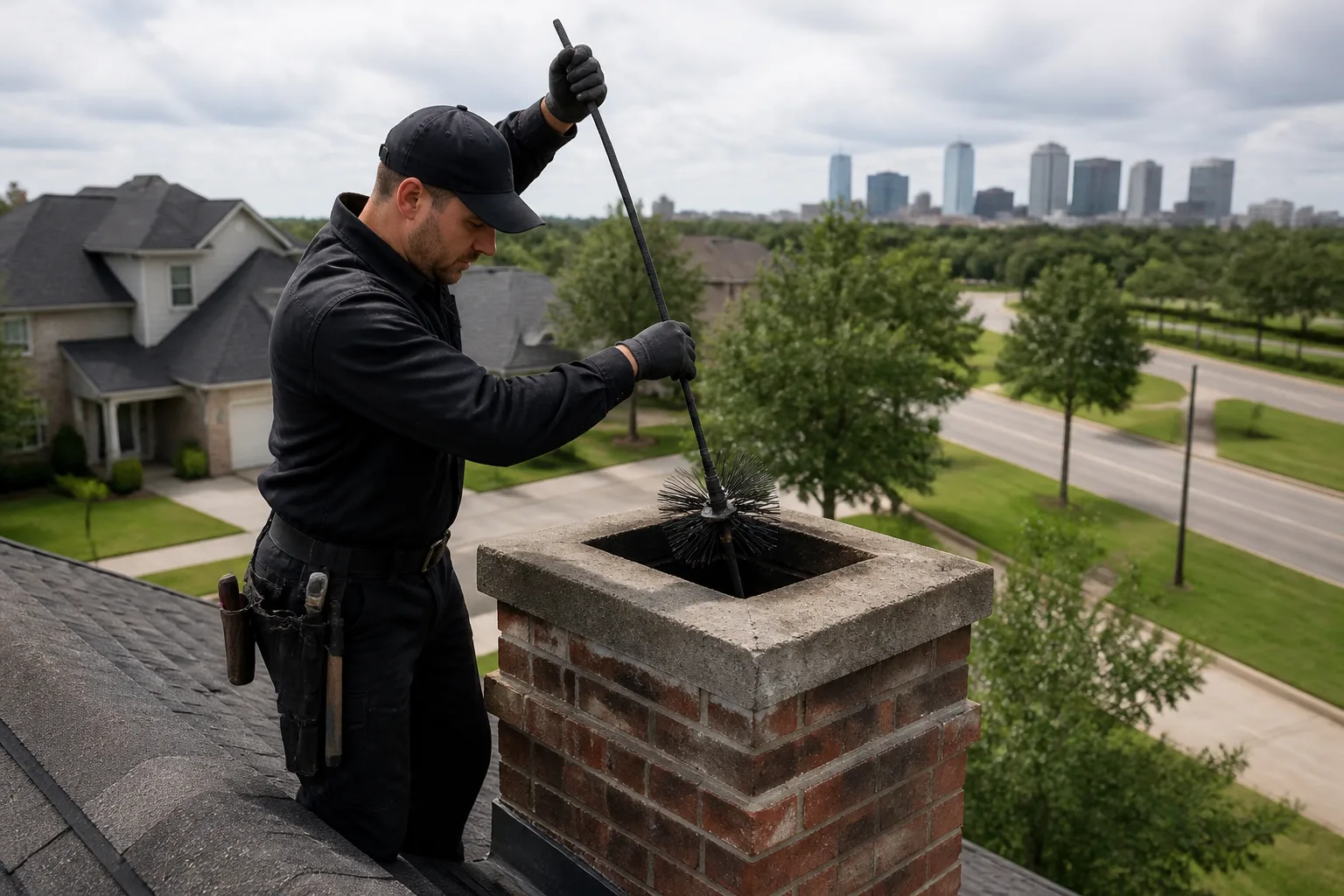
Gelco chemical treatments are formulated to break down and condition creosote deposits inside a flue so they can be more effectively removed during a sweep. They are a supplement to mechanical cleaning, not a replacement for it. The product loosens and chemically alters hardened creosote so brushes and rotary tools can reach material that would otherwise stay stubbornly bonded to the flue wall.
Creosote forms in three recognizable stages, and the treatment question depends entirely on which stage you’re dealing with:
- Stage 1 – soot and light flaky deposits. A standard brush sweep handles this. No chemical treatment needed.
- Stage 2 – hardened, crusty deposits. Brushing removes some of it, but rotary tools or a conditioning treatment may be needed to fully clear the flue.
- Stage 3 – glazed, tar-like creosote. This is the dangerous stage. It’s shiny, hard, and bonded to the flue wall. A rotary brush alone can polish it rather than remove it. This is where Gelco chemical treatment earns its place.
Homeowners in Energy Corridor who burn regularly through the cooler months often reach stage 2 or worse without realizing it. The fire looks fine. The flue is the part you can’t see, which is why a camera inspection before any treatment decision matters.
Is Gelco a substitute for mechanical sweeping?
No. Gelco chemical treatment is a step in a process, and that process still includes mechanical sweeping. A contractor who applies a chemical treatment and calls the job done without a follow-up sweep has not cleaned your chimney. They’ve applied a product and left the creosote in place, softened but not removed.
The correct sequence looks like this:
- Initial inspection, ideally with a camera, to assess creosote stage and flue condition.
- Application of the appropriate chemical treatment to condition hardened or glazed deposits.
- A dwell period, as specified by the manufacturer, to let the product work on the creosote.
- A follow-up mechanical sweep to remove the loosened material.
- A second inspection to confirm the flue is clear.
That dwell period and the follow-up sweep are the parts some contractors skip. In our experience, the most common misapplication isn’t the wrong product – it’s the missing second visit. If a company quotes you a chemical treatment, ask directly whether a return sweep is included and when they’ll verify the result. A contractor working with Gelco correctly will have a clear answer.
When does Gelco treatment add real value in Energy Corridor?
Gelco chemical treatment is most useful in a specific set of situations. Outside those, a straightforward sweep is usually the honest recommendation.
- Stage 3 glazed creosote that rotary brushes can’t fully remove. This is the clearest case. Glazed creosote is a genuine fire hazard, and conditioning it chemically before rotary sweeping is often the only way to clear it without damaging the flue.
- Flues with heavy buildup from restricted draft or poor burning habits. A flue that has been running cold or burning unseasoned wood tends to accumulate more creosote. Treatment helps break down what’s there before a full sweep.
- Chimneys that have gone an extended period without sweeping. When buildup has had time to harden, conditioning before mechanical removal protects the flue liner from aggressive scraping.
Where treatment does not add value: a chimney swept on a reasonable schedule with light stage 1 deposits. In that case, a standard mechanical sweep is all that’s called for, and a company pushing chemical treatment on a lightly soiled flue is selling an add-on, not a solution. Energy Corridor homeowners deserve a straight answer on which category their chimney falls into.
What should you ask before approving a chemical treatment?
Before you agree to any Gelco application, ask four questions. A knowledgeable contractor working with the product as intended will answer all of them without hesitation.
- Which formulation are you using, and why? Different deposits call for different approaches. The answer should reference your specific creosote stage, not a generic script.
- What is the dwell time? The product needs time on the creosote to work. A vague answer here suggests the contractor is guessing.
- Is a follow-up sweep included, and when? This is the verification step. If it isn’t in the quote, the treatment is incomplete.
- Is the product compatible with my liner? Liner material matters. A professional checks this before applying anything. We work with DuraFlex and Olympia Chimney liner systems, so we know how to assess flue condition before any treatment goes in.
You should also ask what the contractor found and see the evidence. We document what we find with camera inspection and a photo report, and we don’t recommend work we can’t show you a reason for. That standard applies to chemical treatment as much as to any repair.
How to verify the contractor is using Gelco as intended
The difference between a contractor who uses Gelco correctly and one who name-drops it is in the process, not the label on the bottle. Here’s how to tell them apart.
A contractor using the product as intended will inspect first, identify the creosote stage with a clear explanation, recommend treatment only when it’s warranted, and schedule the follow-up sweep before leaving. They’ll tell you what formulation they’re applying and why. They won’t suggest a chemical treatment as a default add-on to every sweep.
We work with professional-grade materials from brands like Gelco, HeatShield, Famco, and Copperfield because trade-level products require trade-level knowledge to apply correctly. HeatShield liner resurfacing, for example, offers a genuine alternative to full relining on a damaged but structurally intact flue – but only when the assessment supports it. The same principle applies to Gelco: the product is only as good as the judgment behind using it.
When you’re comparing bids in Energy Corridor, a fair chimney sweep estimate should include a camera inspection, a clear explanation of findings, a written photo report, and a documented plan that specifies whether chemical treatment is needed and how it will be verified. If a contractor can’t give you that, the price isn’t the issue – the process is.
When to call a pro
If you’re seeing shiny black deposits on the flue wall through a camera, if your chimney hasn’t been swept in a while, or if you’re getting creosote odors in the room, that’s the moment to call a professional. Creosote removal near stage 3 involves real risk and specialized tools, and there’s no safe workaround for a glazed flue. A trained technician can assess the stage, recommend the right treatment, and get the flue clean without damaging it. If you’d rather not open a chimney yourself, that’s the right instinct.
From there, our team covers the full system: sweeping, inspection, chimney cap & crown work, fireplace repair, and chimney repair – so inspection findings can be resolved by the same company rather than passed along. If you’re looking for a Chimney Sweep Energy Corridor crew that knows these products, that’s what we do.
The Bottom Line
Gelco chemical treatment is a professional-grade tool for a specific problem: hardened, glazed creosote that mechanical sweeping alone can’t fully address. Used correctly, it’s a valuable step in a well-run chimney service. Used as a substitute for a real sweep, or as a default add-on, it’s just an upsell.
Here’s what to remember:
- Gelco conditions creosote; it doesn’t replace the mechanical sweep.
- It’s most useful for stage 3 glazed creosote and heavy buildup.
- Ask about formulation, dwell time, follow-up sweep, and liner compatibility.
- A camera inspection before and after tells you whether the job is actually done.
The right contractor won’t mind these questions. That’s how you know. Our technicians have up to 11 years of experience, and we’re happy to talk through what’s happening in your flue, why, and what it takes to fix it. If you’re in Energy Corridor and need help, Chimney Sweep Energy Corridor offers free estimates – call (844) 625-7014. We answer 24/7. Fast dispatch from 7am to 7pm, Sunday through Friday.
Frequently Asked Questions
A standard chimney sweep in Energy Corridor typically runs in the range most homeowners expect for a professional mechanical cleaning, and the price for your specific job is set by the written estimate before any work begins. Chemical treatment, liner work, or repairs add to that baseline, and a written estimate will itemize each. Call (844) 625-7014 for an exact quote – estimates are free.
Only if your chimney has stage 2 or stage 3 creosote that a standard sweep can’t fully clear. A camera inspection tells you which stage you’re dealing with. If your flue is lightly soiled, a mechanical sweep is all you need, and a company that recommends treatment on a clean flue is overselling. Call (844) 625-7014 and we’ll inspect before recommending anything.
The general industry rule is once a year, but the right interval depends on how much you burn and how your fireplace runs. A chimney with light use can stretch further; one that sees regular fires should be inspected and swept on schedule. A camera inspection at the start of the season tells you where you stand. Call (844) 625-7014 to book a sweep and inspection.
The chemical treatment softens and conditions the creosote, but it doesn’t remove it. Without the follow-up mechanical sweep, the treated deposits remain in the flue, still a hazard and still needing removal. Skipping the second step wastes the treatment and leaves your chimney no cleaner than before. Call (844) 625-7014 to make sure the job gets finished properly.
Written by the team at Chimney Sweep Energy Corridor.
Need Chimney Cleaning Help?
Call Chimney Sweep Energy Corridor - the local pro we connect you with is licensed and insured, here with fast help in Energy Corridor.
(844) 625-7014