
Last updated November 24, 2026
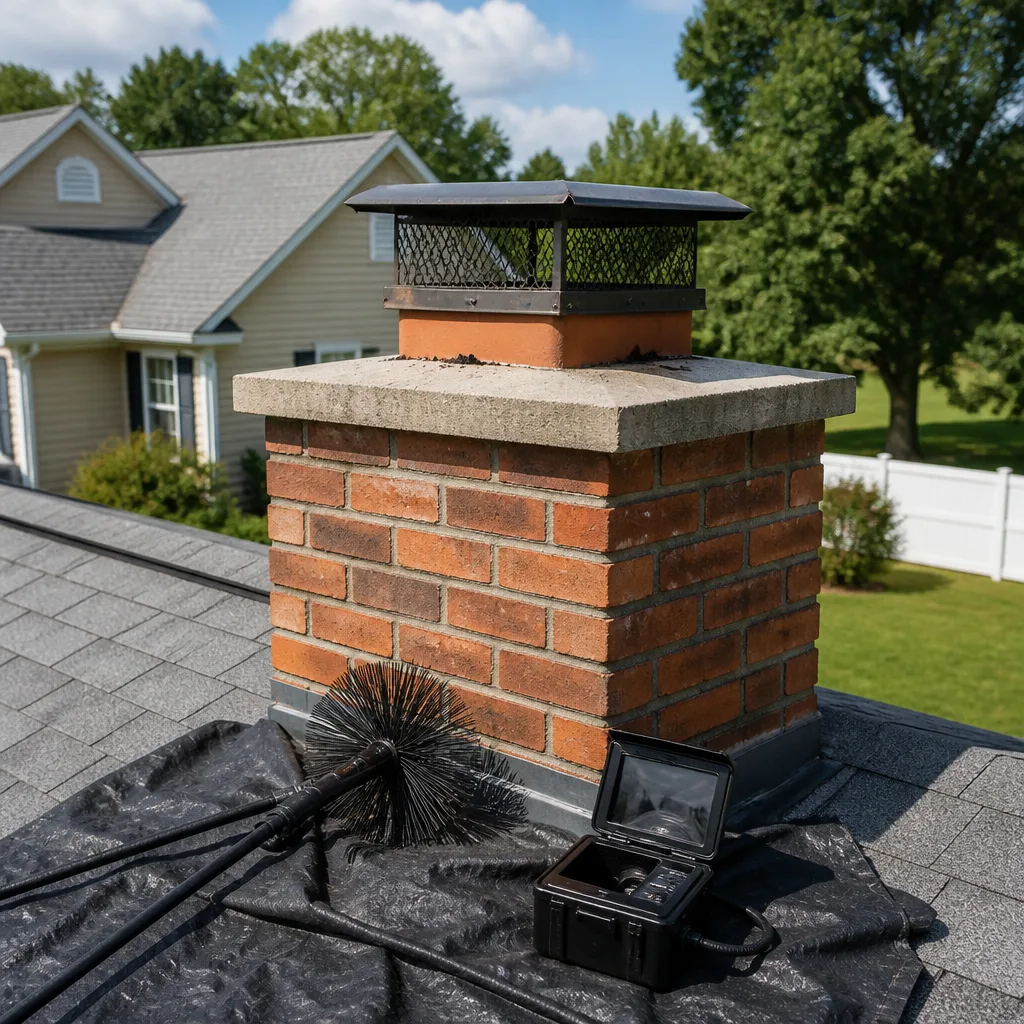 Sweep & inspection
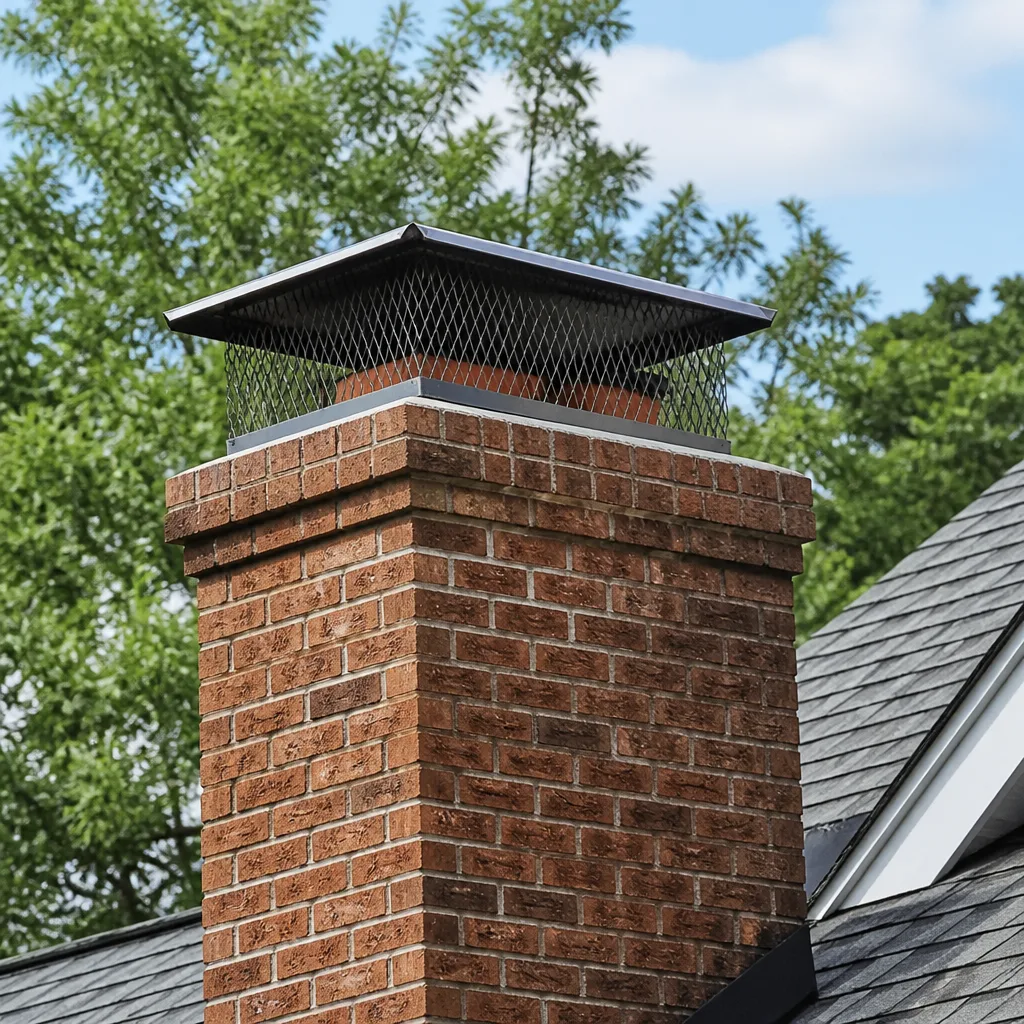 Caps & crowns
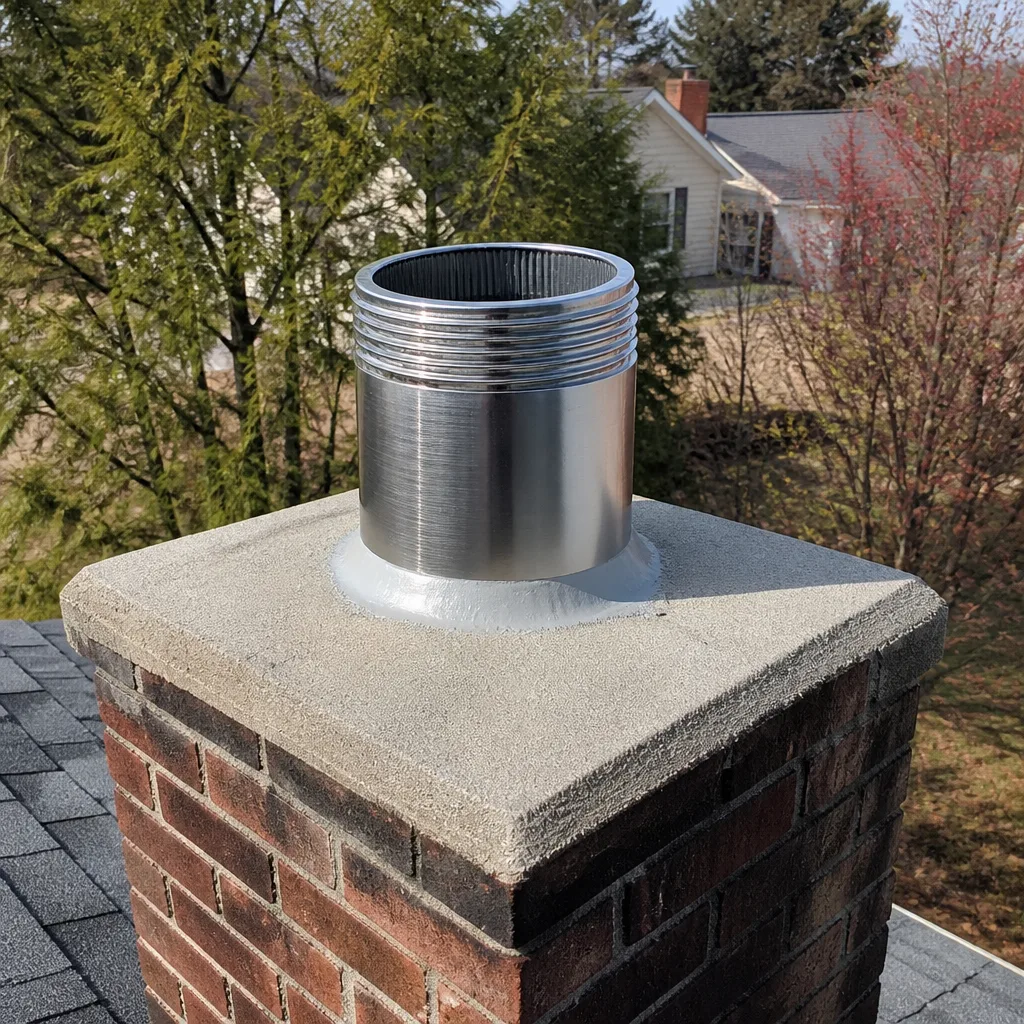 Flue relining
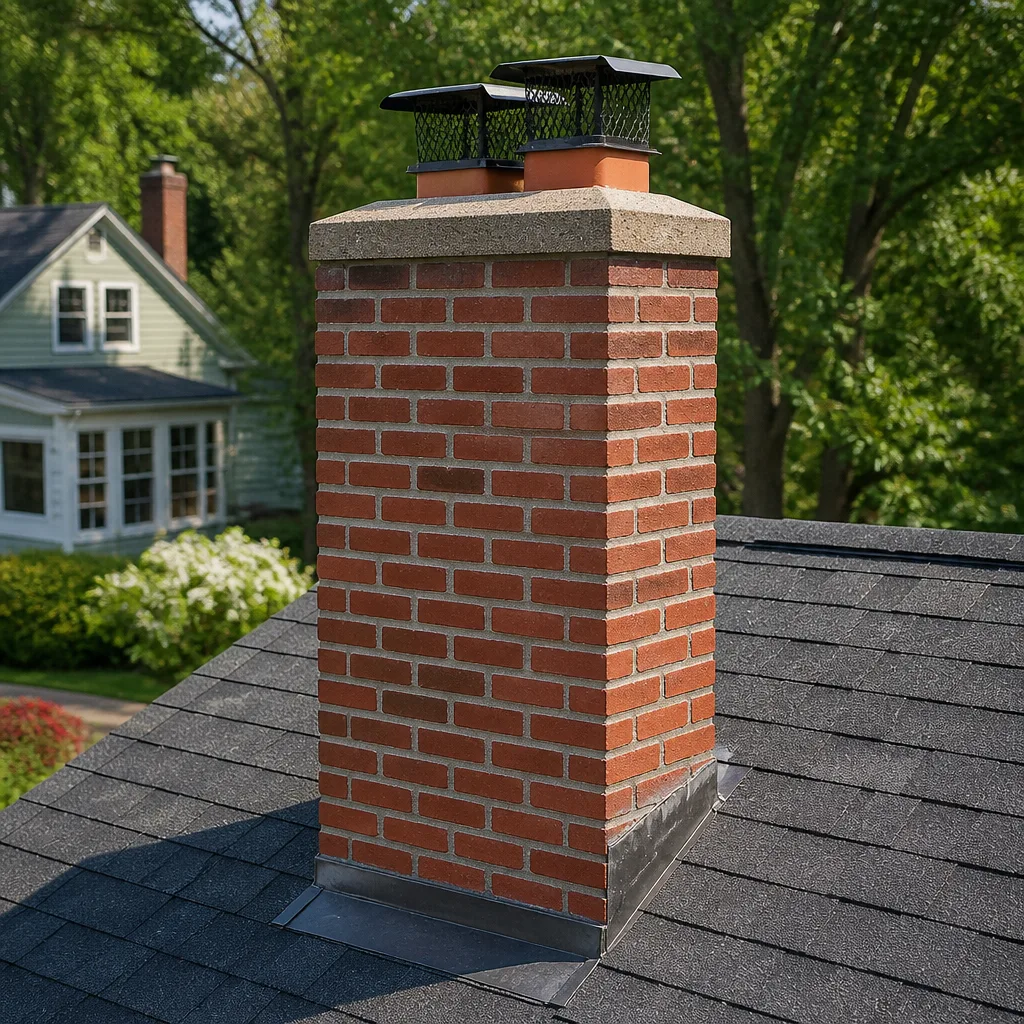 Masonry repair
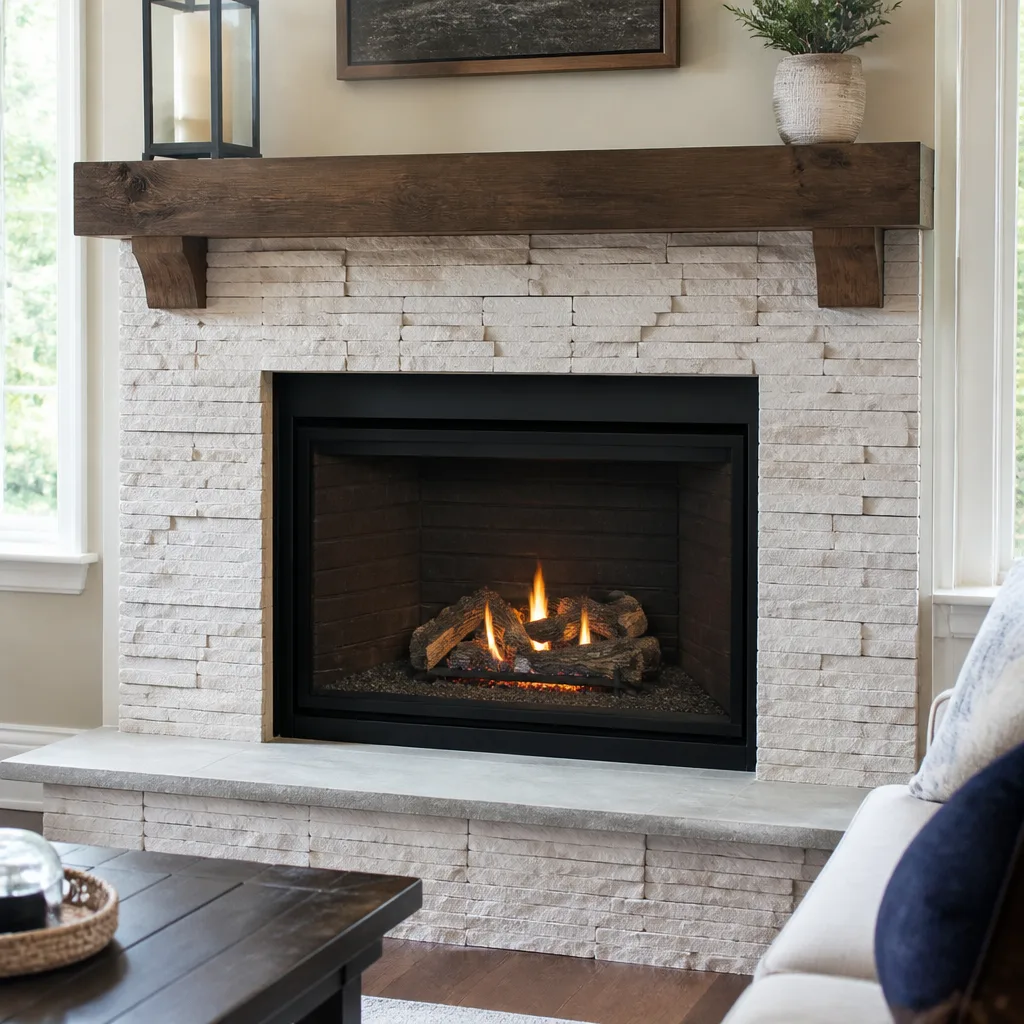 Gas fireplace service
Level 1 sweep and inspection to the NFPA 211 annual standard - flue, crown, cap, and flashing checked and photographed
Chimney sweep logs do not sweep chimneys. They loosen some creosote - which then falls where a brush and vacuum still have to collect it.
Chimney Cleaning Emergency Preparedness Guide for Energy Corridor Homes
Closing the damper during a chimney fire feels like the right instinct. It’s the wrong one. Shutting off the air supply can push toxic smoke back into the living space and drive heat into the framing around the flue, which is exactly where you don’t want it. The correct response is counterintuitive, and most homeowners have never heard it. This guide walks Energy Corridor homeowners through the first five minutes of a chimney fire, the post-storm checklist for high-wind damage, what to do when smoke backdrafts into the room, how chimney-related carbon monoxide differs from an appliance problem, and how to hire emergency chimney help without getting gouged after a storm.
Quick Answer
During a chimney fire, get everyone out of the house, call 911, and do not close the damper. Once the fire department clears the scene, keep the fireplace out of use until a professional inspects the full system. For backdrafting, storm damage, or a carbon monoxide alarm tied to a fireplace or flue, stop using the system immediately and get it inspected before the next burn. Chimney Sweep Energy Corridor handles sweeping, inspection, chimney cap & crown work, and full chimney repair, so findings from an emergency inspection can be resolved without a referral.
Styles & brands we work with
- Sweep & inspection
- Caps & crowns
- Flue relining
- Masonry repair
- Gas fireplace service
Table of Contents
- Chimney Fire Response: The First Five Minutes
- When to Call 911 Versus When to Manage It Yourself
- Post-Storm Checklist: Assessing Chimney Damage from High Winds
- Smoke Backdrafting During Use: Immediate Diagnostic Steps
- Carbon Monoxide and Your Chimney: Evacuate or Investigate?
- How to Find Emergency Chimney Service in the Energy Corridor
- After the Emergency: What a Post-Incident Inspection Covers
- Preparedness Before the Season Starts
Chimney Fire Response: The First Five Minutes
A chimney fire is a controlled burn that has escaped control inside the flue. Creosote, the tar-like residue that builds up on flue walls, ignites when enough of it accumulates and the flue gets hot. The fire can be loud, roaring, and short-lived, or it can smolder silently inside the chimney without anyone noticing until damage shows up later. Both are emergencies, and both demand the same first response.
Here is the sequence to follow, in order:
- Get everyone outside. Adults, children, pets. Move away from the house and stay out until the fire department says otherwise.
- Call 911. Even if the fire appears to be dying down. Chimney fires can reignite in hidden voids, and only the fire department can confirm the fire is fully out.
- Do not close the damper. This is the step that runs against instinct. Closing it traps smoke and heat inside the system and can force combustion gases into the living space through cracks in the flue or masonry.
- If you have a chimney fire extinguisher or a dry-chemical extinguisher rated for the purpose, and you can reach the firebox safely, you may discharge it up into the flue. Never climb onto the roof to fight a chimney fire from above.
- Once the fire department clears the scene, stop using the fireplace. Do not burn anything until an inspection confirms the flue, liner, and surrounding masonry are intact.
What to do in the first five minutes is not complicated. Get out, call for help, keep the damper open, and leave the structure alone. What not to do matters just as much: don’t throw water down the flue (thermal shock can crack masonry), don’t climb on the roof, and don’t assume a short, quiet fire did no damage. Most serious chimney fire damage in Energy Corridor homes shows up in the flue liner and the masonry joints, and it’s invisible from the outside.
When to Call 911 Versus When to Manage It Yourself
Call 911 for any active chimney fire, any smoke entering the living space that you can’t immediately trace to a damper left closed, any smell of burning that persists after the firebox is cold, or any visible flame or glowing at the top of the chimney. There is no scenario where a homeowner should try to manage an active chimney fire alone. The fire department is the right call, every time.
The situations where you don’t call 911 are narrower than most people assume:
- A cold fireplace with a lingering smoky smell. That’s a draft or blockage question for an inspection, not an emergency call.
- A little smoke spillage when you first light a fire on a cold morning. Often a cold-flue issue, not a fire. Watch it, and if it keeps happening, get it inspected.
- A carbon monoxide alarm that sounds while the fireplace isn’t burning. Get out and call the gas utility or 911 depending on the reading. Do not assume the chimney is the source until it’s tested.
When in doubt, call. The fire department would rather respond to a false alarm than arrive at a house with fire inside the walls. Once the emergency is over, a post-incident inspection is the next step, and it should happen before the fireplace is used again.
Post-Storm Checklist: Assessing Chimney Damage from High Winds
Energy Corridor gets its share of strong thunderstorms and the occasional tropical system pushing through the Houston metro. High wind does specific things to a chimney. It can lift or dislodge a cap, crack a crown, drop limbs onto the flue top, and stress masonry joints that were already weakening. The chimney is one of the few parts of the house most homeowners never look at directly, which is exactly why storm damage goes unnoticed until the first fire of the season.
After a high-wind event, run this checklist from the ground with binoculars before you light anything:
- Look at the cap. Is it still seated on top of the flue? Is it tilted, missing, or visibly loose? A displaced cap leaves the flue open to rain and animals.
- Check the crown. The crown is the concrete or masonry surface at the very top of the chimney. Look for new cracks, chunks missing, or separation where the crown meets the flue.
- Scan the masonry for new cracks or spalling. Fresh cracks in the brick or mortar after a storm are a sign the chimney moved or took an impact.
- Look for debris on the roof or in the firebox. Limbs, shingles, and nesting material can end up in the flue. If you see debris in the firebox that you didn’t put there, stop and get it inspected.
- Check for water staining on the ceiling or walls near the chimney. New staining after a storm points to a cap, crown, or flashing failure.
- Smell the firebox. A strong creosote or sooty smell after a storm can mean water got in and mixed with residue.
If any of those checks turn up a problem, don’t light a fire until a professional looks at it. A damaged cap or crown is the most common entry point for water, and water is the slow killer of masonry chimneys. The chimney cap & crown work we do is designed to close those entry points and keep the flue dry between seasons. If the storm left you with structural damage beyond the cap and crown, that’s a chimney repair question, and it should be evaluated before the next burn.
Smoke Backdrafting During Use: Immediate Diagnostic Steps
Smoke rolling out of the firebox into the room while a fire is burning is a draft failure, and it has three common causes: a blocked flue, a flue that’s too cold to establish draft, or a pressure imbalance in the house that’s overpowering the chimney. Sorting out which one you’re dealing with takes a few minutes and prevents a lot of unnecessary worry.
Here’s how to narrow it down:
- Open a window near the fireplace. If the smoke immediately reverses and starts drafting up the chimney, you’re dealing with a pressure problem, not a blockage. Modern tight houses, kitchen exhaust fans, and bathroom fans can pull enough air out of a house to overpower a chimney.
- Check the damper. Confirm it’s fully open. A partially closed damper is the most common cause of smoke spillage, and it’s the easiest thing to rule out.
- Look up the flue with a flashlight. If you can see an obstruction, a nest, or heavy creosote buildup, stop and call for an inspection. Don’t try to clear a flue from below with a pole or a broom.
- Notice when it happens. Smoke spillage on a cold start that clears once the flue warms is a cold-flue issue. Smoke that spills every time, no matter how long the fire has been burning, points to a blockage or a draft problem that needs a professional diagnosis.
- Check the HVAC. A return duct or air handler pulling negative pressure near the fireplace can cause backdrafting in Energy Corridor homes with tightly sealed envelopes. If the smoke spillage correlates with the HVAC running, that’s a signal worth mentioning to the inspector.
What you shouldn’t do is keep burning through a backdraft. Every smoke event deposits more creosote on the flue walls and pushes combustion byproducts into the living space. If the problem doesn’t resolve with the window-open test and a fully open damper, shut the fire down and get it inspected. The same goes for a gas insert that starts spilling exhaust into the room: turn it off and treat it as a carbon monoxide concern until proven otherwise.
Carbon Monoxide and Your Chimney: Evacuate or Investigate?
Carbon monoxide from a chimney problem behaves differently from carbon monoxide from a failed appliance. A furnace or water heater with a cracked heat exchanger leaks CO directly into the living space. A chimney with a blocked flue, a damaged liner, or a backdrafting condition pushes CO into the house through the firebox or the appliance vent connector. The symptoms are the same, but the source and the fix are different, and knowing which one you’re dealing with changes the response.
Evacuate immediately if any of these are true:
- The CO alarm sounds and anyone in the house has a headache, dizziness, nausea, or confusion.
- You smell combustion exhaust indoors while a fireplace or gas appliance is running.
- Soot streaks appear around the firebox, the appliance vent, or the draft hood.
- A gas appliance backdrafts visibly (spillage or flame roll-out).
Get everyone outside, call 911 or the gas utility from outside the house, and don’t re-enter until the fire department clears it. If the alarm sounds and no one has symptoms, open windows, shut off the fireplace and any gas appliances, and have the system inspected before using it again. A CO alarm that goes off while the fireplace isn’t burning points away from the chimney and toward an appliance, but the two systems share the same pressure environment. An inspection that covers the whole venting arrangement is the only way to know.
Long-term, the chimney-related CO risk in Energy Corridor homes comes down to three things: a clean flue, an intact liner, and a cap and crown that keep water and debris out. A blocked or damaged flue can’t vent properly, and a flue that can’t vent properly is a CO source. That’s why chimney sweep appointments and annual inspections matter more than most homeowners realize. They’re the preventive step that keeps a venting problem from becoming an emergency.
How to Find Emergency Chimney Service in the Energy Corridor
After a storm or a chimney fire, the market for chimney work gets noisy. Out-of-area crews show up offering quick fixes, prices get vague, and homeowners end up paying for work they can’t verify. Finding the right company under pressure comes down to a short list of questions you can ask before anyone touches your chimney.
Ask these before you book:
- “Will the inspection include a camera and a photo report?” A professional inspection documents what’s found in the flue with photos you can see. If the answer is vague, keep looking.
- “Is the price set in writing before work starts?” A legitimate chimney company will put an estimate in writing before booking. Verbal pricing that changes on arrival is a red flag.
- “What brands and materials do you work with?” Companies that use professional-grade products from manufacturers like DuraFlex, Olympia Chimney, Famco, or Copperfield are working with trade-level parts, not hardware-store substitutes.
- “Can you handle the repair yourself?” A company that only sweeps will hand off repair work to someone else. A full-system company handles the inspection and the fix.
- “What’s the scope of the inspection?” Inspections that align with NFPA 211 guidelines cover the full system: firebox, flue, liner, cap, crown, and the surrounding structure.
On price gouging after a storm: a written estimate is your protection. If a company won’t put the scope and price in writing, walk away. The estimate should be free and the final price should be the written number, not a verbal ballpark that moves. For an exact quote, call (844) 625-7014. Estimates are free.
After the Emergency: What a Post-Incident Inspection Covers
Once the fire department has cleared the scene and the chimney is cold, the next step is a full inspection. The purpose isn’t to sell you something; it’s to document what the event did to the system so you know what’s safe to use and what needs repair. In our experience, the most common post-incident findings are creosote damage to the liner, cracked masonry joints, warped dampers, and a compromised cap or crown.
A post-incident inspection should cover:
- The flue and liner. Camera inspection for cracks, gaps, and creosote glazing. A damaged liner can’t safely contain combustion gases.
- The firebox and damper. Warping, cracking, and damper operation.
- The smoke chamber and smoke shelf. Creosote buildup and any structural damage from heat.
- The cap and crown. Displacement, cracking, and separation.
- The exterior masonry. Cracks, spalling, and joint integrity.
- The attic and ceiling penetrations. Signs of heat transfer or water intrusion around the flue.
If the inspection finds liner damage, HeatShield resurfacing is worth asking about. It’s a restoration method that rebuilds the interior of a damaged but structurally intact flue rather than requiring a full liner replacement. Not every company offers it, and not every flue qualifies, but when it fits, it’s a lower-impact option than a full reline. If the flue needs a full liner, DuraFlex flexible liner systems handle complex flue configurations that straight liners can’t. Either way, the findings should come with photos you can see before you decide.
If the inspection turns up fireplace damage beyond the flue, the same company should be able to handle fireplace repair without sending you to a second contractor. That’s what full-system coverage means in practice: one company, one set of findings, one plan.
Preparedness Before the Season Starts
The best time to deal with a chimney emergency is before one happens. Most of what turns a chimney problem into a crisis is buildup that wasn’t cleaned, a cap that wasn’t checked, or a crown that was already failing when the storm hit. The work that prevents emergency calls is routine, and it’s the same work whether you’re in a brick colonial off Eldridge or a newer build near Memorial.
A few things worth doing before the first cool evening:
- Book a sweep and inspection. Annual service is the baseline. If you burn heavily, more often than that.
- Check the cap and crown visually. Look for cracks, displacement, and missing chunks. Both are water entry points.
- Test your CO alarms. Replace batteries, verify the units are working, and confirm at least one is near the sleeping area.
- Clear the area around the fireplace. Keep combustibles well away from the firebox.
- Keep a fire extinguisher rated for chimney use nearby. Know where it is before you need it.
If any of those checks turn up something you’re not sure about, call it in. A quick inspection resolves a lot of “is this a problem?” questions, and a documented inspection is the foundation of every other decision you’ll make about the chimney.
Common Mistakes to Avoid
- Closing the damper during a chimney fire. It feels safe, but it traps heat and smoke and can force combustion gases into the living space. Leave it open and get out.
- Assuming a short, quiet chimney fire did no damage. Creosote fires can crack liners and masonry without making a scene. An inspection is the only way to know.
- Lighting a fire after a storm without checking the cap and crown. High-wind damage often shows up first at the top of the chimney, and a displaced cap leaves the flue open to rain and debris.
- Burning through a backdraft. If smoke is spilling into the room, stop. Continuing to burn deposits more creosote and pushes exhaust into the house.
- Treating a CO alarm as an appliance-only problem. A chimney with a blocked or damaged flue can be the source. Get the full venting system inspected.
- Hiring the first company that shows up after a storm. Ask for a written estimate, camera documentation, and confirmation that the repair can be handled in-house. Out-of-area crews with vague pricing are a red flag.
- Skipping the annual inspection because “it looked fine last year.” A lot happens inside a flue in a year, and the issues that cause emergencies are rarely visible from the hearth.
See the difference
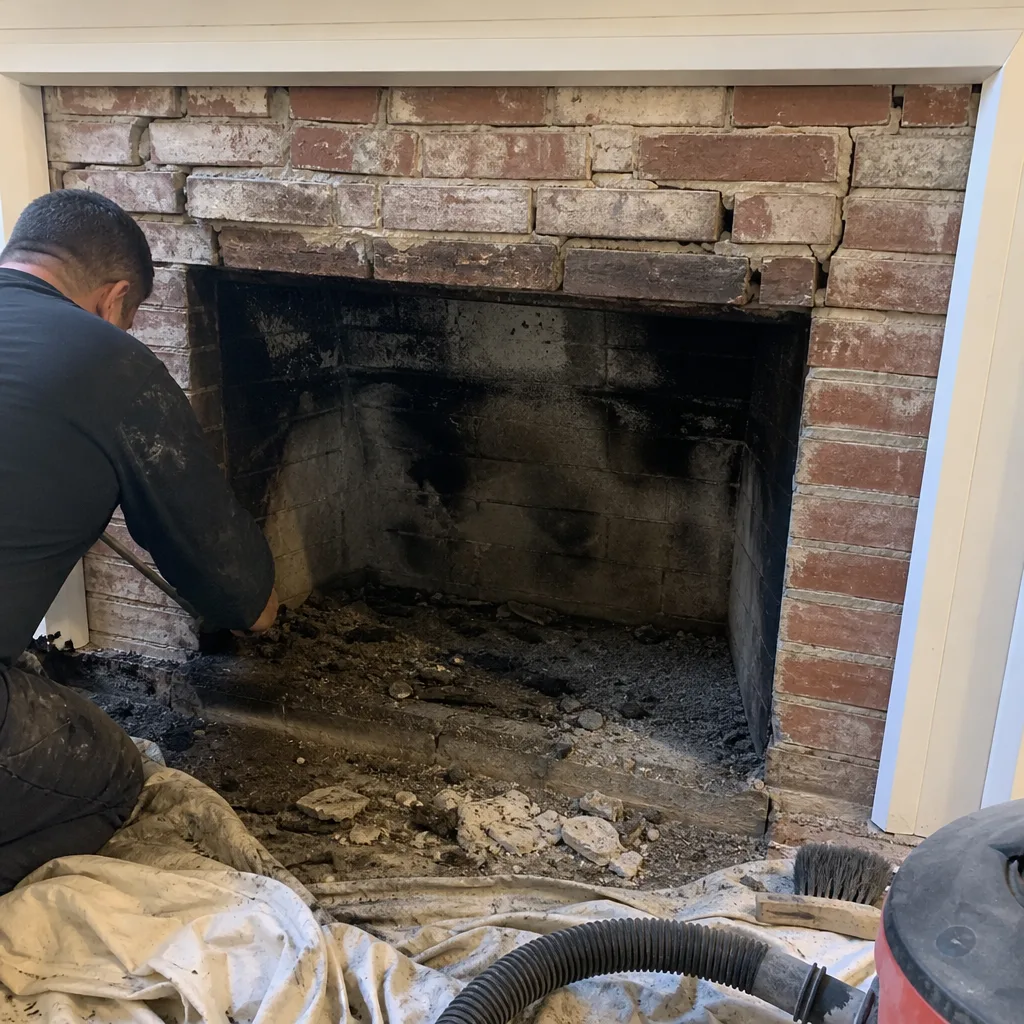 Before
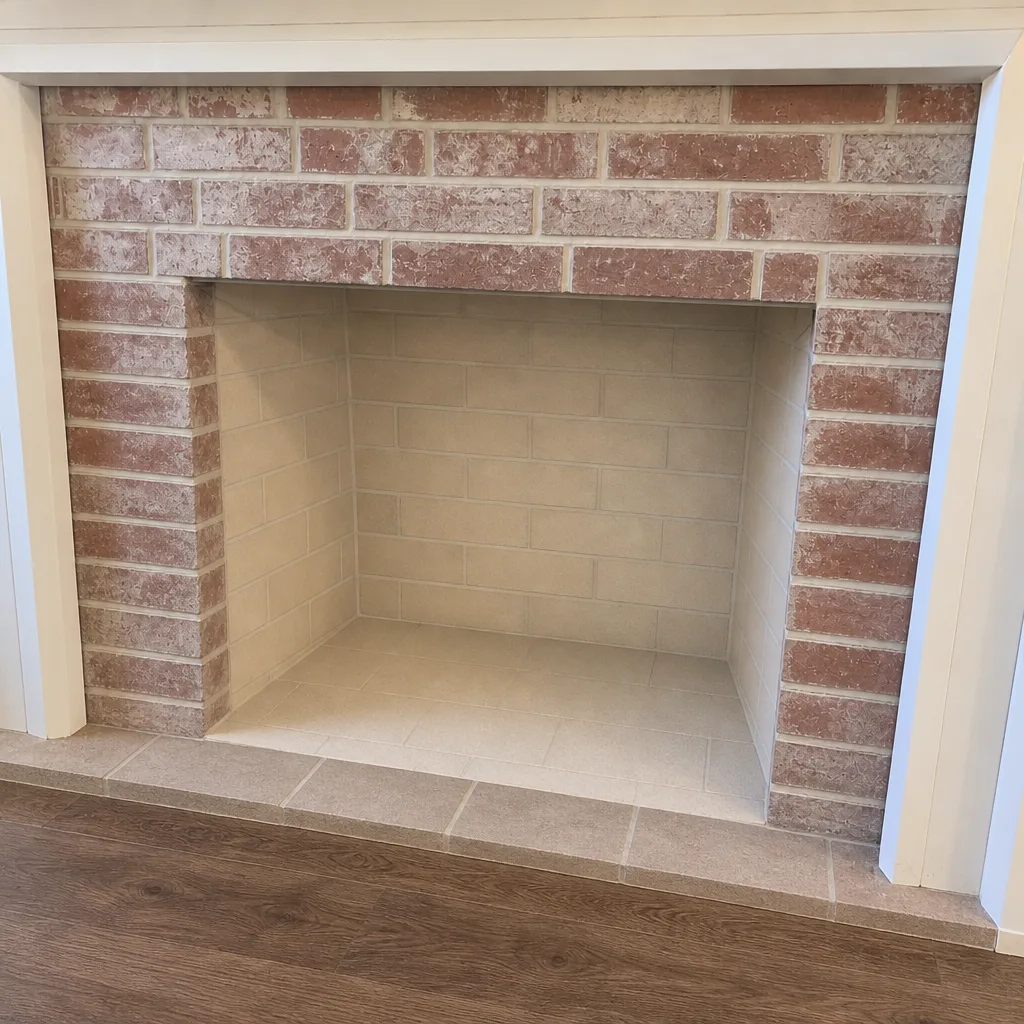 After
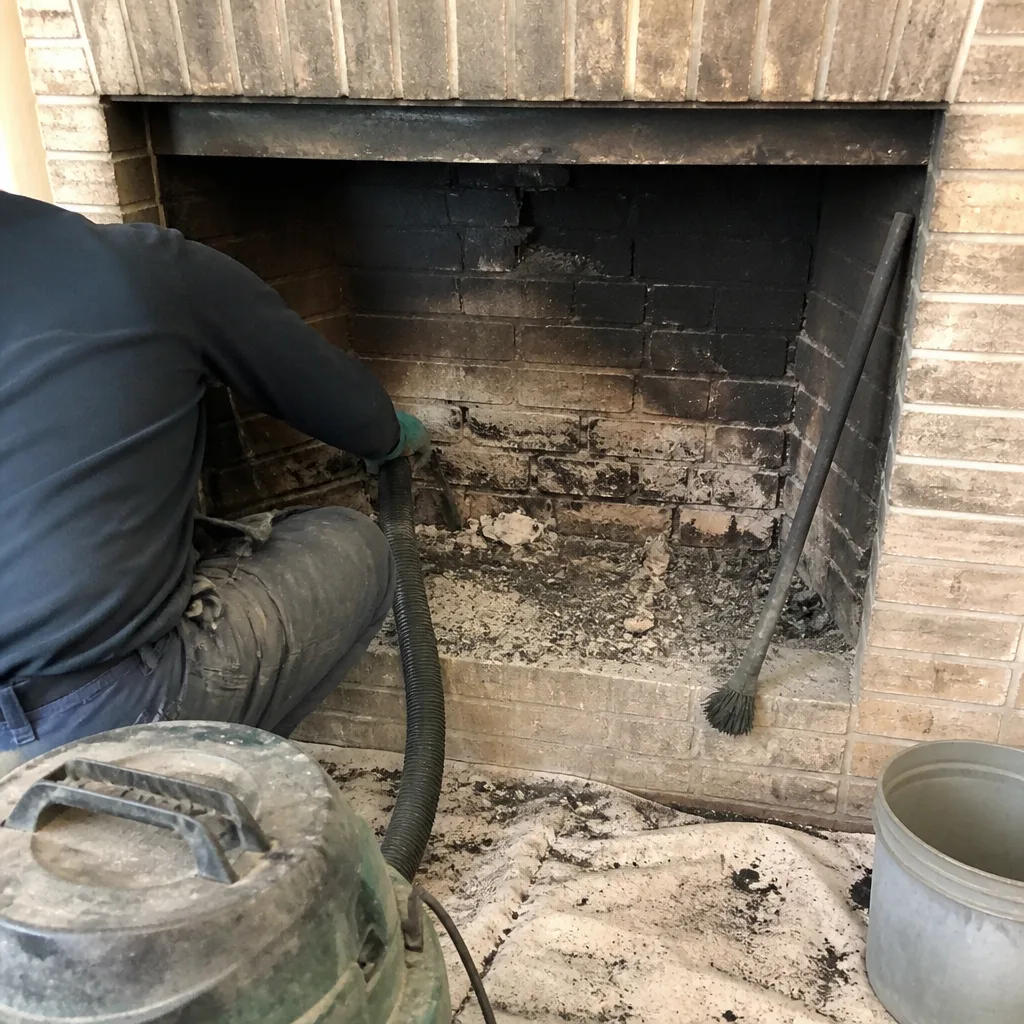 Before
 After
 Before
 After
When to Call a Professional
Call a professional for anything you can’t verify yourself: smoke that spills into the room every time you burn, soot streaks around the firebox or vent, a CO alarm that’s been triggered, visible storm damage to the cap, crown, or masonry, or any fire that was out of control at any point. The same goes for the quieter things, like a lingering smoky smell, water staining near the flue, or a firebox that’s stopped drawing the way it used to. Chimney Sweep Energy Corridor offers free estimates in Energy Corridor. Call (844) 625-7014. We answer 24/7. Fast dispatch from 7am to 7pm, Sunday through Friday. Our technicians have up to 11 years of experience, and our inspections document what we find with photos you can see for yourself.
Frequently Asked Questions
Get everyone out of the house and call 911, and leave the damper open. Do not close it. Closing the damper traps heat and smoke inside the flue and can force combustion gases into the living space. Once the fire department clears the scene, stop using the fireplace until a professional inspects the full system. Call (844) 625-7014 for an exact quote on the inspection; estimates are free.
Look at the cap and crown from the ground first. A displaced cap, a cracked crown, new cracks in the masonry, or debris in the firebox are all signs of wind damage. Water staining on the ceiling or walls near the chimney is another signal. If any of those are present, don’t light a fire until the system is inspected. Call (844) 625-7014 to book a post-storm inspection in Energy Corridor.
Smoke backdrafting usually comes down to one of three things: a blocked flue, a flue that’s too cold to establish draft, or a pressure imbalance from the HVAC or exhaust fans overpowering the chimney. Opening a window near the fireplace is a quick diagnostic; if the smoke reverses, it’s a pressure issue. If it doesn’t, shut the fire down and get it inspected. Call (844) 625-7014 for an inspection with photo documentation.
Yes. A blocked flue, a damaged liner, or a backdrafting chimney can push carbon monoxide into a home. If your CO alarm sounds and anyone has a headache, dizziness, nausea, or confusion, get everyone outside and call 911 from outside the house. If the alarm sounds with no symptoms, ventilate and shut off the fireplace and gas appliances, then get the venting system inspected before using it again. Call (844) 625-7014 to schedule.
Once a year is the baseline for most homes, and more often if you burn wood heavily or notice creosote buildup. A sweep and inspection before the season starts is the simplest way to prevent a fire or a backdraft. Professional chimney sweeps align their inspections with industry-standard NFPA 211 guidelines. Call (844) 625-7014 to book a sweep; estimates are free.
Ask for a written estimate before work starts, a camera inspection with a photo report, and confirmation that the company handles repairs in-house. Ask what brands and materials they work with; companies using DuraFlex, Olympia Chimney, Famco, or Copperfield are working with professional-grade products. If the pricing is vague or the scope isn’t written down, walk away. Call (844) 625-7014 for a written estimate.
The Bottom Line
The first five minutes of a chimney emergency decide how much damage happens. Get out, call 911, leave the damper open, and stop using the system until it’s been inspected. After a storm, check the cap and crown before you light anything. If smoke backdrafts or a CO alarm sounds, shut it down and get the venting system inspected. And hire a company that documents what it finds with photos and puts the price in writing before work begins. Chimney Sweep Energy Corridor covers the full system, from sweeping and inspection to cap and crown work and chimney repair. One company handles it, and the estimate is free. Call (844) 625-7014. We answer 24/7. Fast dispatch from 7am to 7pm, Sunday through Friday.
Written by the team at Chimney Sweep Energy Corridor.