
Last updated November 24, 2026
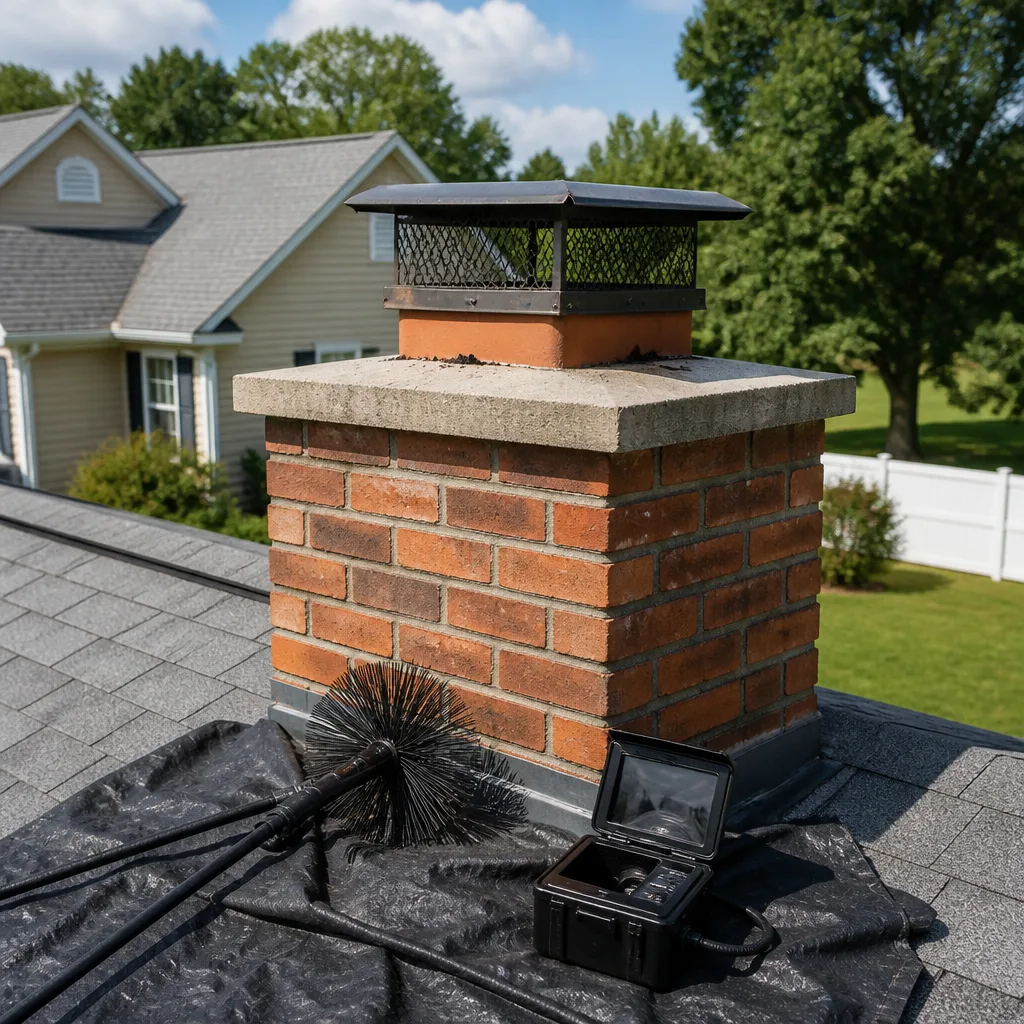 Sweep & inspection
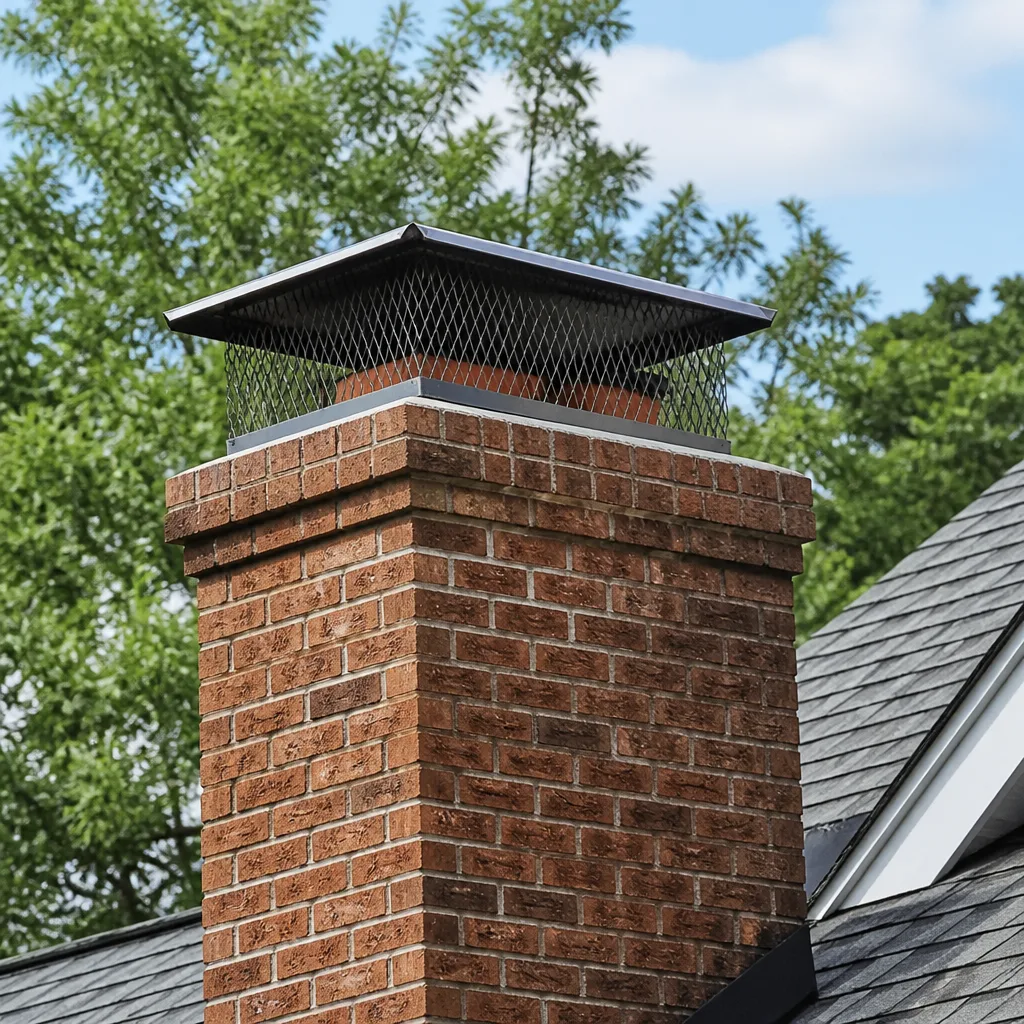 Caps & crowns
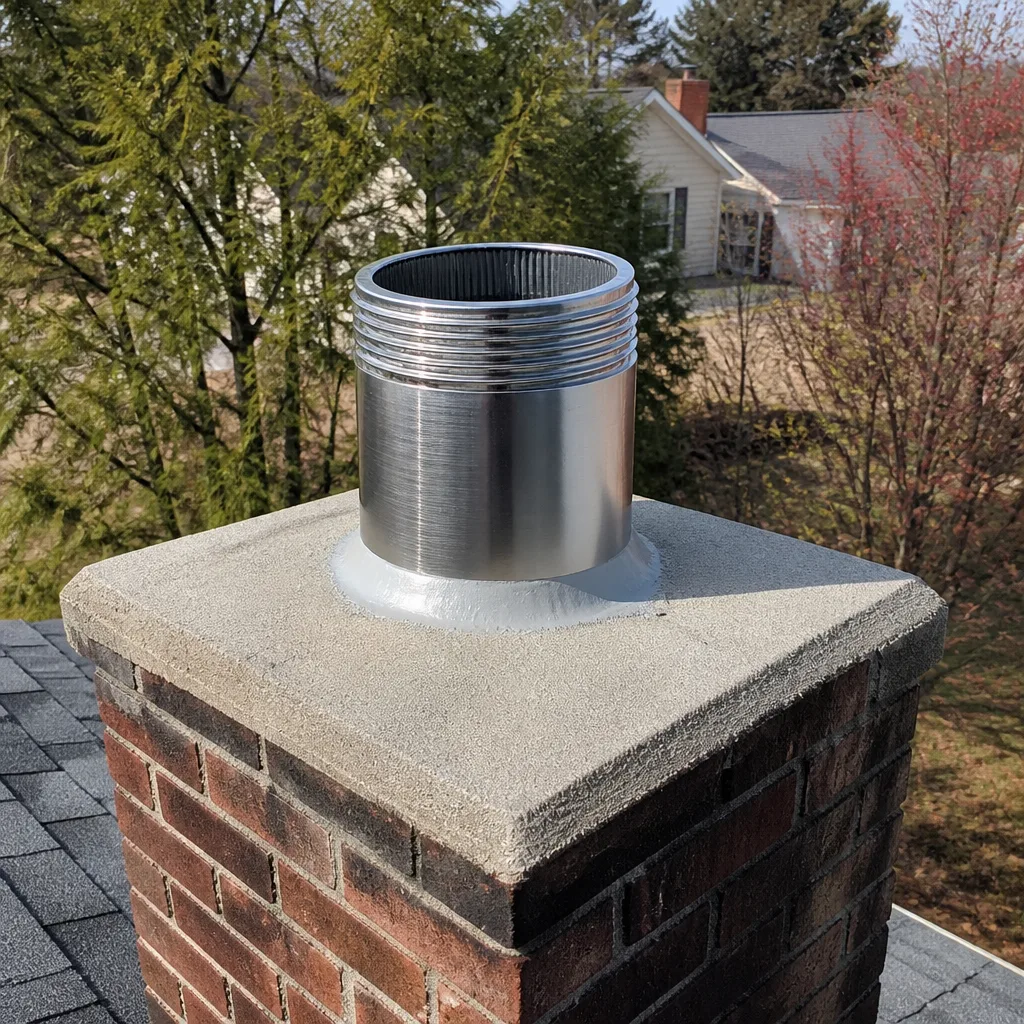 Flue relining
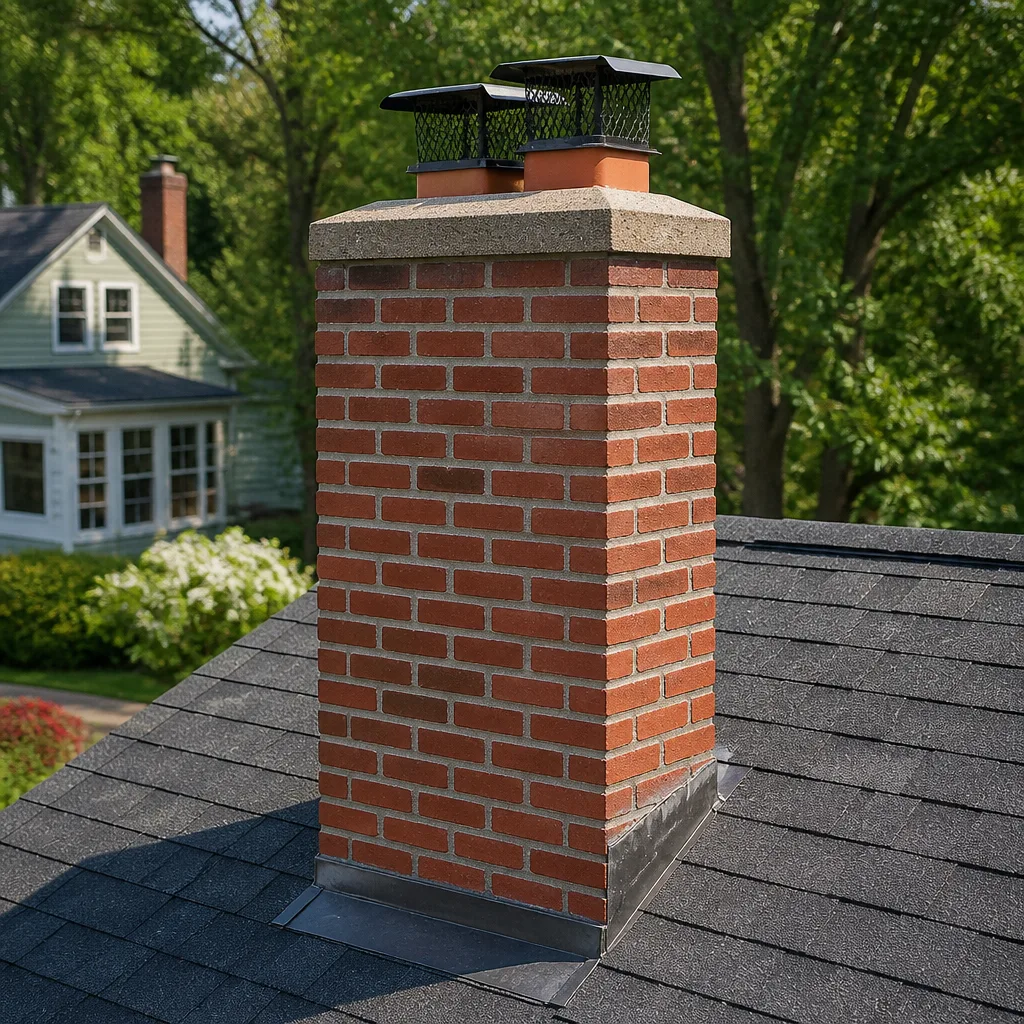 Masonry repair
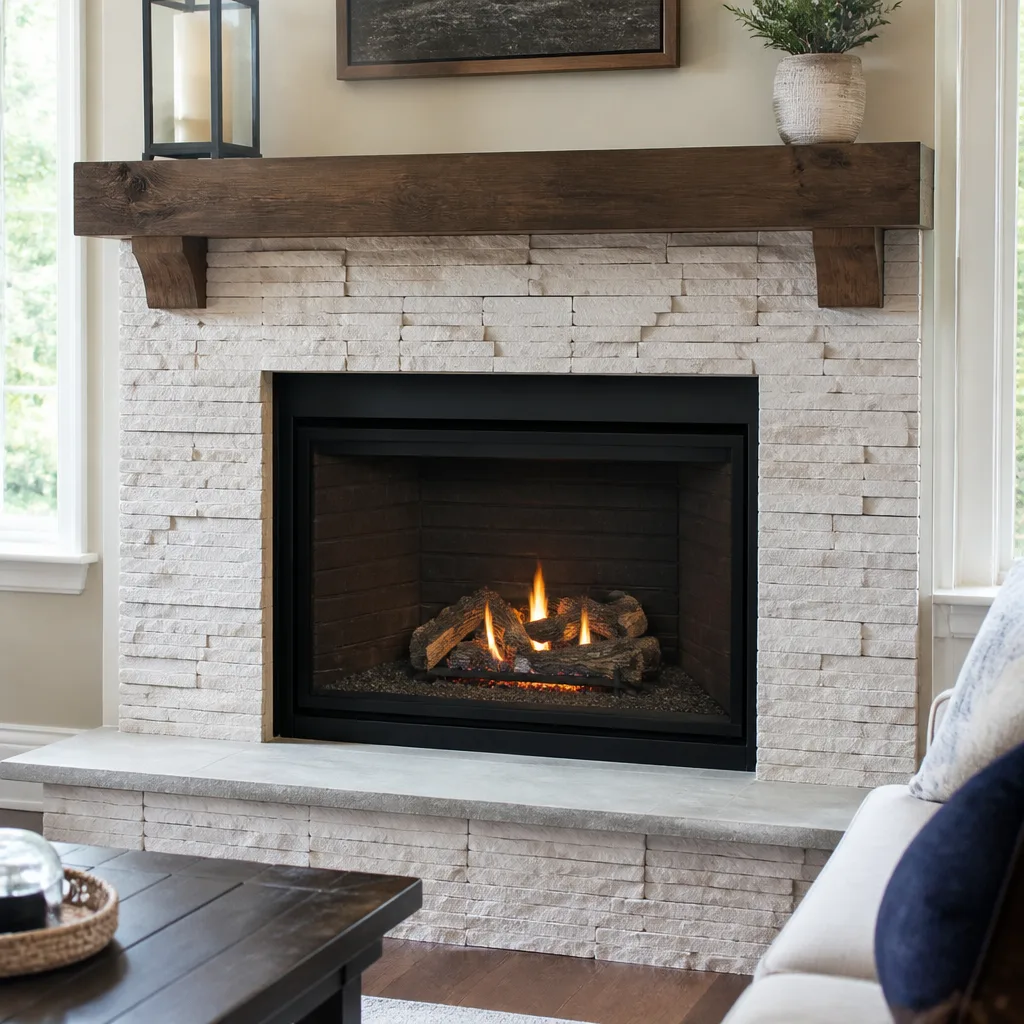 Gas fireplace service
Level 1 sweep and inspection to the NFPA 211 annual standard - flue, crown, cap, and flashing checked and photographed
Chimney sweep logs do not sweep chimneys. They loosen some creosote - which then falls where a brush and vacuum still have to collect it.
Chimney Cleaning Warning Signs: An Energy Corridor Homeowner’s Reference Guide
The warning signs that matter most rarely look like warnings. Efflorescence, that white chalky staining on exterior brick, reads as cosmetic to almost everyone who sees it. It isn’t. It’s the visible trail of water moving through your masonry and carrying dissolved salts outward as it dries, and by the time it shows on the surface, moisture has already found a pathway through your crown, your flashing, or the liner itself. The same misreading happens with summer chimney odors, sluggish drafts, and damper problems. This guide pairs each symptom with its actual mechanical cause so you can triage accurately instead of waiting for a system failure to tell you what was wrong.
Quick Answer
The most reliable chimney cleaning and repair warning signs are white staining or crumbling mortar on exterior masonry, a smoky smell from the fireplace in summer, a fire that’s harder to start or smokes into the room, a damper that won’t seal, and soot flakes or debris dropping into the firebox. Any one of these means the system needs an inspection, not necessarily a major repair. The distinction between a nuisance symptom and a structural one is the whole point of this guide.
Styles & brands we work with
- Sweep & inspection
- Caps & crowns
- Flue relining
- Masonry repair
- Gas fireplace service
Table of Contents
- Efflorescence, Spalling, and What Exterior Staining Really Means
- Why Your Chimney Smells in Summer (And Why It’s Different During a Fire)
- How to Check Your Damper From Inside the Firebox
- Carbon Monoxide: The Warning Sign You Can’t See
- Stucco-Clad Chimneys and Hidden Houston-Area Damage
- Creosote: Reading the Flue Through What Comes Out of It
- Draft Problems and Backdrafting Conditions
- How Often Energy Corridor Chimneys Actually Need Service
Efflorescence, Spalling, and What Exterior Staining Really Means
White mineral staining on brick is called efflorescence, and it means water has entered the masonry, dissolved salts from the brick and mortar, and pushed those salts to the surface as it evaporated. The stain itself is harmless. What produced it isn’t. Water is getting into a place engineered to stay dry, and the source is almost always above: a crown that’s cracked, flashing that’s pulled loose, or a cap that’s missing or damaged. Left alone, the cycle repeats until the mortar between bricks begins to fail.
Spalling is the next stage. Water absorbed into brick freezes, expands, and pushes the face of the brick off in flakes or chunks. In the Energy Corridor’s mild winters this happens less through freezing and more through repeated wetting and drying, which weakens the bond between the brick face and its core. Spalling brick is a structural warning, not a cosmetic one, and it tends to appear on the side of the chimney that catches prevailing wind and rain.
Mortar joint erosion follows. Joints that recede visibly from the brick face, or that crumble when touched, mean the mortar has lost its binding strength. This is the point where a chimney cap & crown inspection becomes urgent rather than routine. The crown is the concrete or mortar surface on top of the chimney that sheds water away from the flue. A hairline crack in the crown lets water straight into the masonry below, and that crack widens as water works into it.
Here’s how to read what you’re seeing:
- Powdery white staining that brushes off: active efflorescence, water is currently moving through the masonry.
- White staining with flaking brick faces: spalling has begun, the brick itself is deteriorating.
- Recessed or crumbling mortar joints: structural weakening, needs evaluation before more weather cycles.
- Rust stains below the crown or on flashing: water is pooling and corroding metal components.
- Dark, damp patches that don’t dry: ongoing infiltration rather than past moisture.
We document what we find on every inspection, because efflorescence on one chimney and efflorescence on another can trace back to entirely different failures. The fix on one house is a crown repair. On the next it’s flashing work. You shouldn’t be asked to guess which one applies to yours.
Why Your Chimney Smells in Summer (And Why It’s Different During a Fire)
A smoky or sour smell coming from the fireplace in summer is moisture activating creosote residue that’s built up on the flue walls. Creosote is the tar-like byproduct of wood combustion, and it’s hydroscopic, meaning it absorbs water from humid air. The Energy Corridor’s long, humid summers give it plenty to absorb. As the deposits pull in moisture, they release that sharp campfire-and-vinegar odor into the house, usually strongest on still, muggy days with little air movement. The smell isn’t a sign of an active fire risk at that moment. It’s a sign that enough residue has accumulated to hold moisture, which means the flue is due for a sweep.
That same smoky smell during a fire means something different. If you smell smoke while the fireplace is burning, you have a draft problem or a blockage, not a humidity problem. The two symptoms get confused constantly because they smell similar. The timing is what distinguishes them.
A quick way to sort it out:
- Note when the smell appears. Between fires on humid days points to moisture-driven creosote odor. During a fire points to draft or obstruction.
- Check the weather. High humidity, low wind, and closed-up house air all amplify the summer smell.
- Watch the smoke. A fire that lights slowly and spills smoke forward rather than drawing up is a draft issue.
- Look for debris. Soot flakes falling into the firebox suggest the flue needs attention regardless of smell.
In our experience running sweeps across Energy Corridor neighborhoods, the summer smell is one of the most common reasons a homeowner calls us, and it’s also one of the most useful. It’s the chimney telling you the flue has loaded up. A chimney sweep before burning season clears the residue that holds the odor, and the smell usually doesn’t return until the next season’s deposits build up.
How to Check Your Damper From Inside the Firebox
You can identify a damaged or missing damper from inside the firebox without tools. The damper is the metal plate above the fire, operated by a handle or lever. Open it fully, then close it, and watch how the plate seats. A damper that doesn’t sit flush, that rattles when you touch it, that has visible gaps at the edges, or that won’t move through its full range of travel is not sealing. That’s a finding worth acting on.
A stuck-open damper in a Houston summer is a real money problem. The chimney is an open shaft to the outdoors. When the damper doesn’t seal, your air conditioning is pulling cooled indoor air straight up the flue and out, and pulling hot, humid outdoor air in to replace it. The system runs longer to hold the set temperature. Homeowners often attribute the higher cooling bill to an aging unit or a leaky house, when a poorly sealing damper is contributing to the load every single hour.
What to check from the firebox:
- Full closure: the plate should meet the frame with no daylight visible around the edge.
- Smooth operation: the handle should move without grinding, catching, or seizing.
- Rust and corrosion: any rust on the damper plate or frame signals moisture reaching the assembly.
- Debris on the plate: soot, leaves, or nesting material resting on the damper can prevent a seal.
- Rattle when closed: a loose plate that rattles is not seated and is letting air through.
Damper work falls under fireplace repair, and it’s worth doing at the same time as a sweep so the two jobs don’t get done twice. A damper that won’t close is also a small safety matter, since an open flue is an open path for smoke and carbon monoxide if a fire smolders or a backdraft develops.
Carbon Monoxide: The Warning Sign You Can’t See
Carbon monoxide is an invisible warning sign in the sense that you can’t see, smell, or taste it, and a chimney that’s drafting correctly carries it safely up the flue. When draft fails, combustion gases spill back into the room instead of going up, and that’s backdrafting. A blocked flue, a damaged liner, an improperly sized flue for the appliance, or a house that’s too tightly sealed for the chimney to pull air all create the conditions for backdrafting. Gas inserts and wood-burning fireplaces both produce combustion gases. Neither is safe to run with a compromised flue.
What detector placement can and can’t tell you:
- Can tell you: that CO has reached the room in measurable quantity, assuming the unit is within its tested range and the batteries are good.
- Can’t tell you: that a chimney is drafting correctly, or that a small intermittent spill is happening.
- Can’t tell you: that a flue is blocked near the top, because the CO may not reach the detector’s location before dispersing.
- Best practice: place detectors on each level and near sleeping areas, and treat a chimney inspection as the only reliable check on draft performance.
If a detector alarms, get everyone outside and call the fire department. Don’t wait to see if it’s a false alarm, and don’t run the fireplace while you sort out whether the alarm was real. A chimney inspection after the fact is how you find what caused it. Our technicians have up to 11 years of experience reading draft and flue conditions, and the findings are always documented so you can see what the camera showed.
Stucco-Clad Chimneys and Hidden Houston-Area Damage
Stucco-clad chimneys are common in Houston-area construction, and they can hold hidden masonry damage that hasn’t yet cracked the exterior surface. Stucco is a cement-based coating applied over a substrate, and it’s a barrier material: it sheds water at the surface when it’s intact and performing. The problem is that stucco can stay intact and look fine while the masonry or framing underneath gets wet. Water enters through a failed seal at a penetration, a hairline crack around flashing, or the top edge where the stucco meets the crown, and it stays trapped behind the coating. Moisture that can’t escape through a breather dries slowly, and in the Energy Corridor’s humid climate, “dries slowly” can mean it doesn’t dry at all before the next rain.
Stucco-clad chimneys, then, are exactly the ones you can’t diagnose by looking. Cracks in the stucco surface are a late symptom, not an early one, because the covering hides what’s happening behind it. The warning signs show up in other places first: rust forming on the fireplace damper or the firebox metal, efflorescence appearing at the base of the chimney, interior wall staining near the chimney chase, or a smell of damp masonry in the room. Each of those is worth an inspection that looks past the surface.
This is where a full-system approach matters more than a cleaning-only service. We work with professional-grade materials from brands used by chimney contractors nationwide, including HeatShield for liner resurfacing and DuraFlex flexible liner systems for complex flue configurations, and we handle chimney sweep and repair in the Energy Corridor as one company so nothing gets handed off between a cleaner and a mason. Stucco-clad systems also make a correctly installed cap and crown even more important, because that top edge is where most trapped moisture originates.
Creosote: Reading the Flue Through What Comes Out of It
Creosote deposits come in three stages, and you can often estimate the stage from what shows up at the fireplace. Stage one is light, flaky soot that brushes off the flue wall easily and looks like gray dust. Stage two is a black, crusty deposit that’s harder to remove and often comes down as chips or flakes into the firebox. Stage three is glazed, hard, tar-like material that’s baked onto the flue wall and is the form most associated with chimney fire risk. You can’t reliably judge the stage by looking up the flue from below, but the debris pattern at the firebox gives you a rough idea of how loaded the system is.
Factors that build creosote faster in an Energy Corridor home:
- Burning unseasoned or wet wood, which produces more smoke and more deposits per fire.
- Restricted air supply, which starves the fire and sends more unburned material up the flue.
- Cool flue walls on exterior chimneys, which condense smoke into creosote before it exits.
- Frequent small, smoldering fires rather than hot, complete burns.
- Long gaps between sweeps that let deposits build up over multiple seasons.
Soot and debris falling into the firebox, or flakes settling on the hearth, are two of the clearest “time to sweep” signals a homeowner gets. If you’re seeing material come down, it’s building up above. A camera inspection during the sweep shows you exactly where it’s concentrated and whether the flue liner is intact. If the liner is damaged but the flue structure is sound, HeatShield liner resurfacing can restore it in cases where full relining isn’t necessary, which is one of the differentiators a general sweep crew usually can’t offer.
Draft Problems and Backdrafting Conditions
Draft is the upward pull of air through the chimney, and it depends on a warm flue, an unobstructed path, and enough air in the house to feed the fire. When any of the three is missing, smoke doesn’t leave. It lingers, spills forward, or comes back into the room. In the Energy Corridor, tightly built modern homes are a common part of the picture: exhaust fans in kitchens and bathrooms, clothes dryers, and HVAC systems all pull air from the house, and a tightly sealed house can be starved of the replacement air a chimney needs to draft.
Signs of a draft problem:
- Smoke entering the room when you light a fire or add wood.
- The fire lights slowly and smolders rather than catching.
- Soot marks on the fireplace face above the opening.
- A downdraft of cold air coming down the chimney when no fire is lit.
- A fireplace that works on some days and not others, which often tracks with outdoor temperature and wind.
Some of these are operator issues, like a cold flue that needs a minute of warming before the fire draws. Others are mechanical: a partially blocked flue, a flue that’s too large or too small for the appliance, or a badly fitting damper. Sorting out which is which requires looking at the whole system from the firebox to the crown. We don’t guess at draft problems. We document what the flue looks like and explain what’s causing the spill before recommending anything.
How Often Energy Corridor Chimneys Actually Need Service
Most wood-burning chimneys need sweeping once a year if they’re used regularly through the burning season, and inspection at the same time. A chimney that gets occasional use, or a home with a gas insert rather than wood, may stretch longer between sweeps, but the inspection schedule stays annual. The reason isn’t arbitrary. Deposits you can’t see accumulate whether you burned a lot or a little, and the structural checks (crown, cap, flashing, liner) catch small problems before they become repairs.
The Energy Corridor’s seasons shape the timing. Burning season here is short and mild compared with northern climates, which means a single pre-season sweep usually clears the flue for the year. The humid summer is when creosote residue holds moisture and produces the smell that sends most homeowners looking for a chimney sweep. We often get asked whether the smell means it’s already too late for a routine sweep. It doesn’t. It means the residue is saturated, and a sweep sets it right.
A practical annual rhythm:
- Before burning season: sweep and inspect. This is the main service window.
- After the last fire of the season: glance at the firebox for debris, and check the damper seal.
- Mid-summer: if you notice the smoky smell, that’s a cue rather than a crisis.
- After any major storm: check the cap and look for new staining on the exterior.
Two of the most common repair calls we handle in Energy Corridor homes are cap and crown failures and fireplace repair, and both tend to start as small findings that got noticed late. The cap keeps water and animals out of the flue. The crown sheds water off the top. When either one fails, the warning signs are on the outside of the chimney long before they show up inside.
Common Mistakes to Avoid
- Treating efflorescence as cosmetic. White staining is evidence of water movement through masonry, not a surface blemish, and ignoring it lets the damage progress to spalling and mortar failure.
- Assuming a summer smell means something’s burning. The smoky smell in summer is moisture activating creosote, not an active hazard at that moment, but it does mean the flue is due for a sweep before the next season.
- Skipping the damper check. A stuck-open damper in Energy Corridor’s long cooling season costs real money on air conditioning, and it’s one of the easiest things to check from the firebox and the easiest to forget.
- Relying only on a carbon monoxide detector. A detector tells you CO has reached the room, not that your chimney is drafting properly. An inspection is the only reliable draft check.
- Judging a stucco-clad chimney by the stucco. Stucco can look intact while the masonry behind it stays wet. Look for rust, interior staining, and efflorescence at the base instead of waiting for a surface crack.
- Hiring a cleaner with no repair capability. If the sweep finds a crown failure or a damaged liner, you want the same company to handle it rather than a referral chain. A Chimney Sweep Energy Corridor inspection is performed by technicians who can also do the work.
- Burning wet wood and calling it good enough. Unseasoned wood builds creosote faster and is one of the reasons flues load up between annual sweeps, especially in a humid climate.
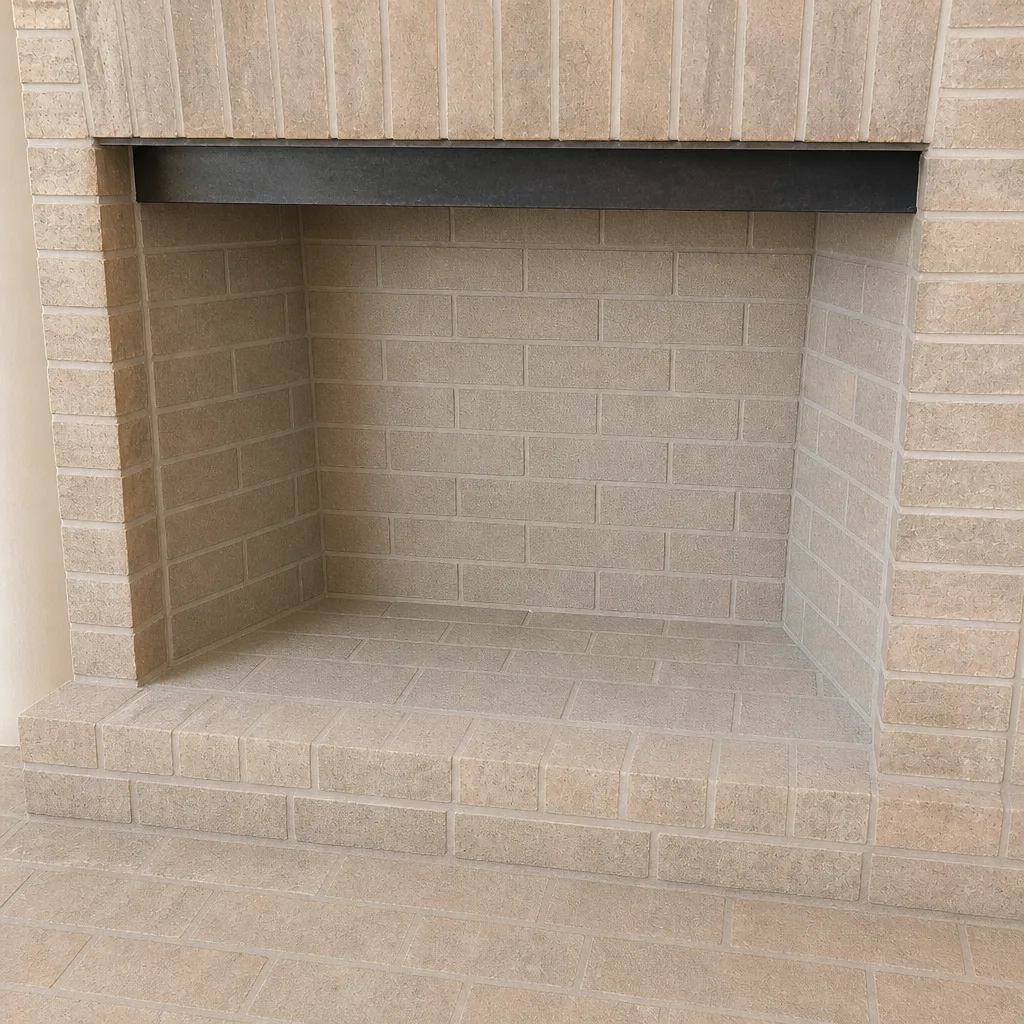
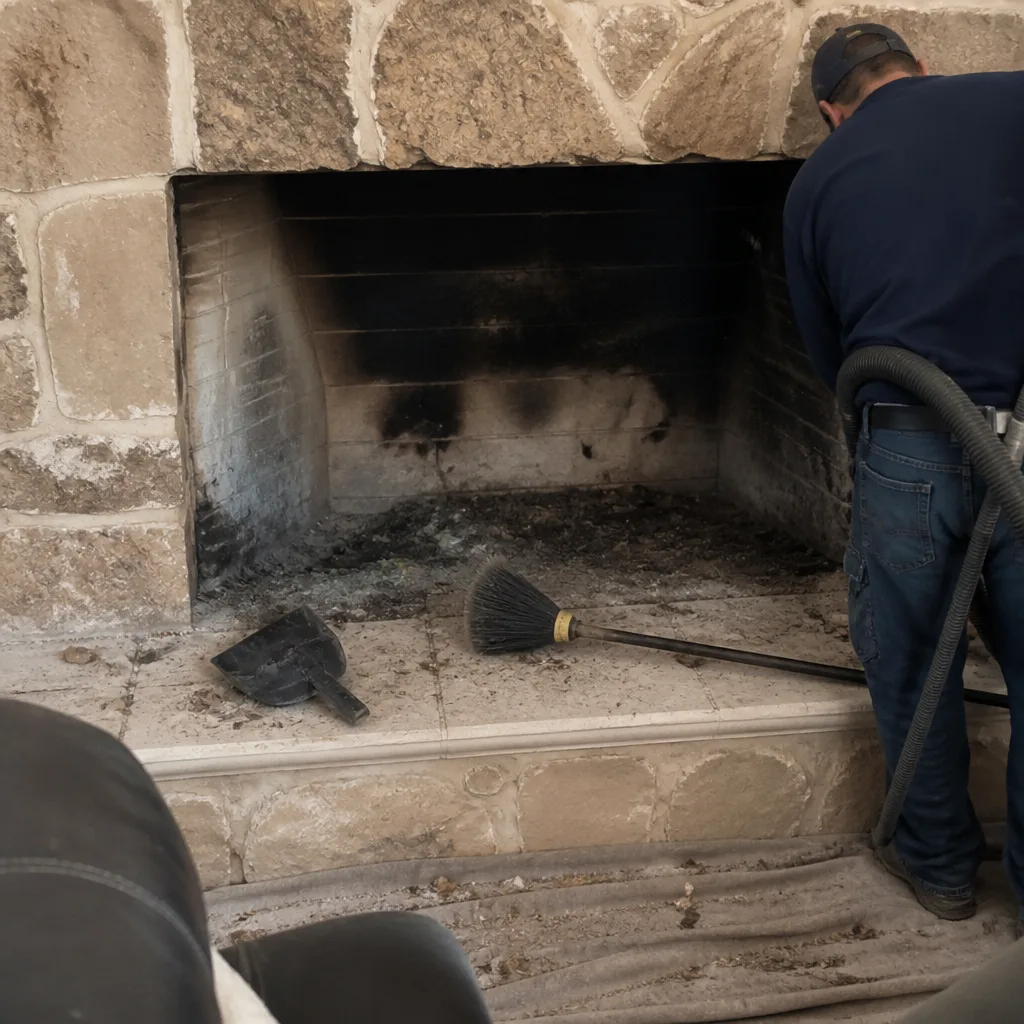
See the difference
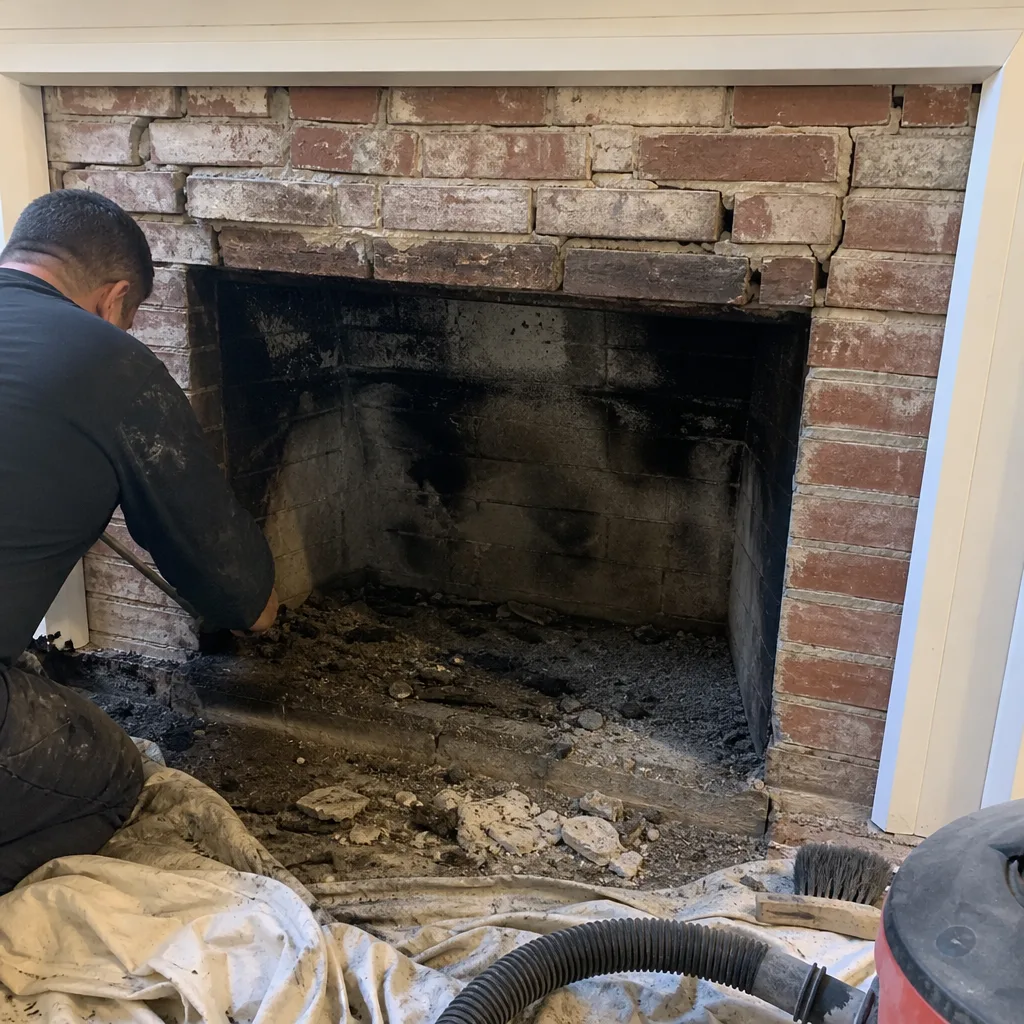 Before
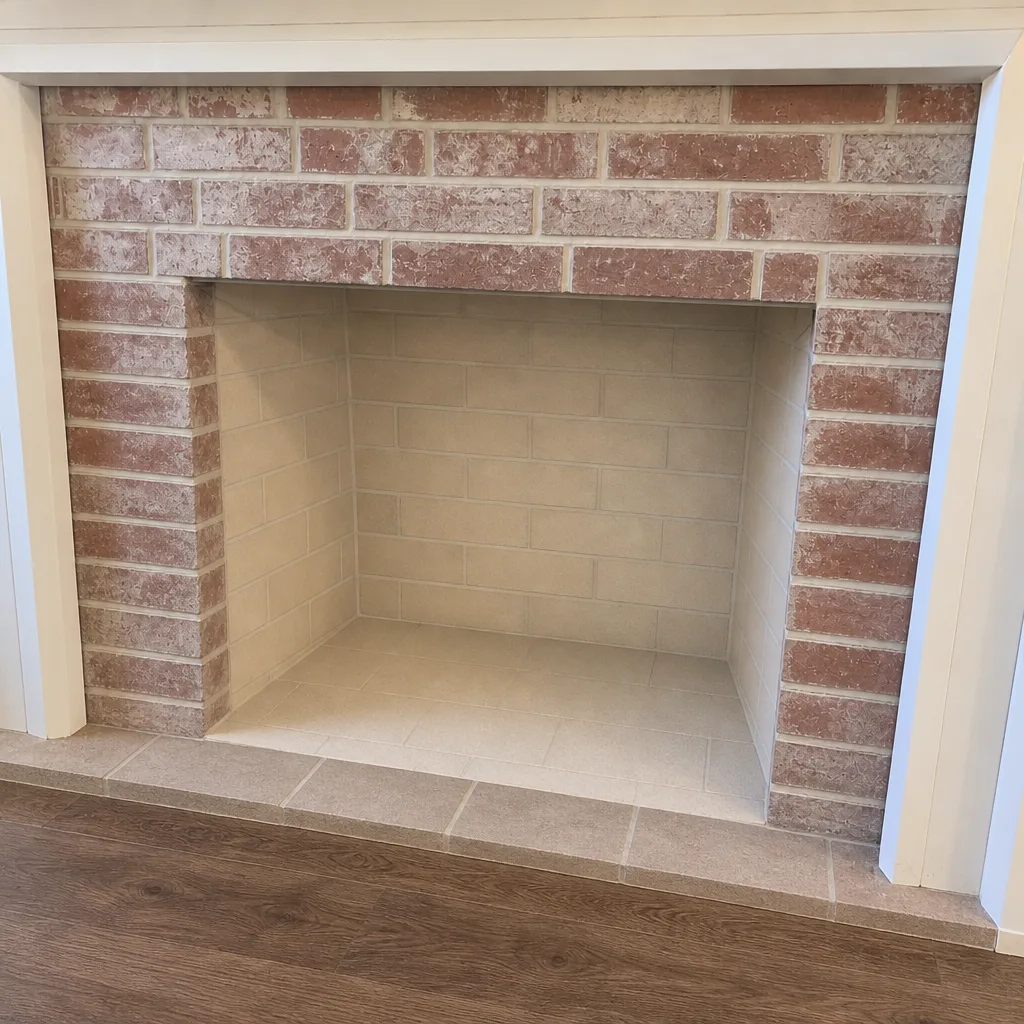 After
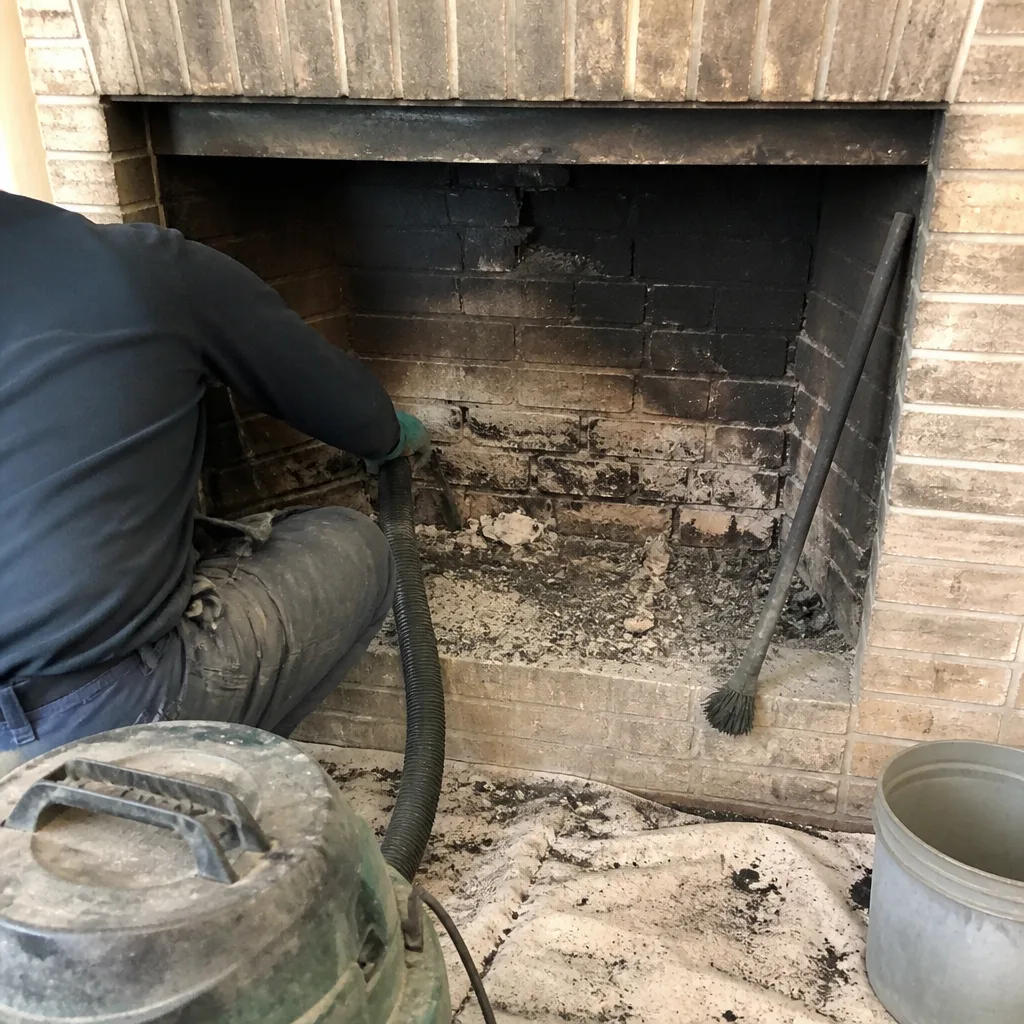 Before
 After
 Before
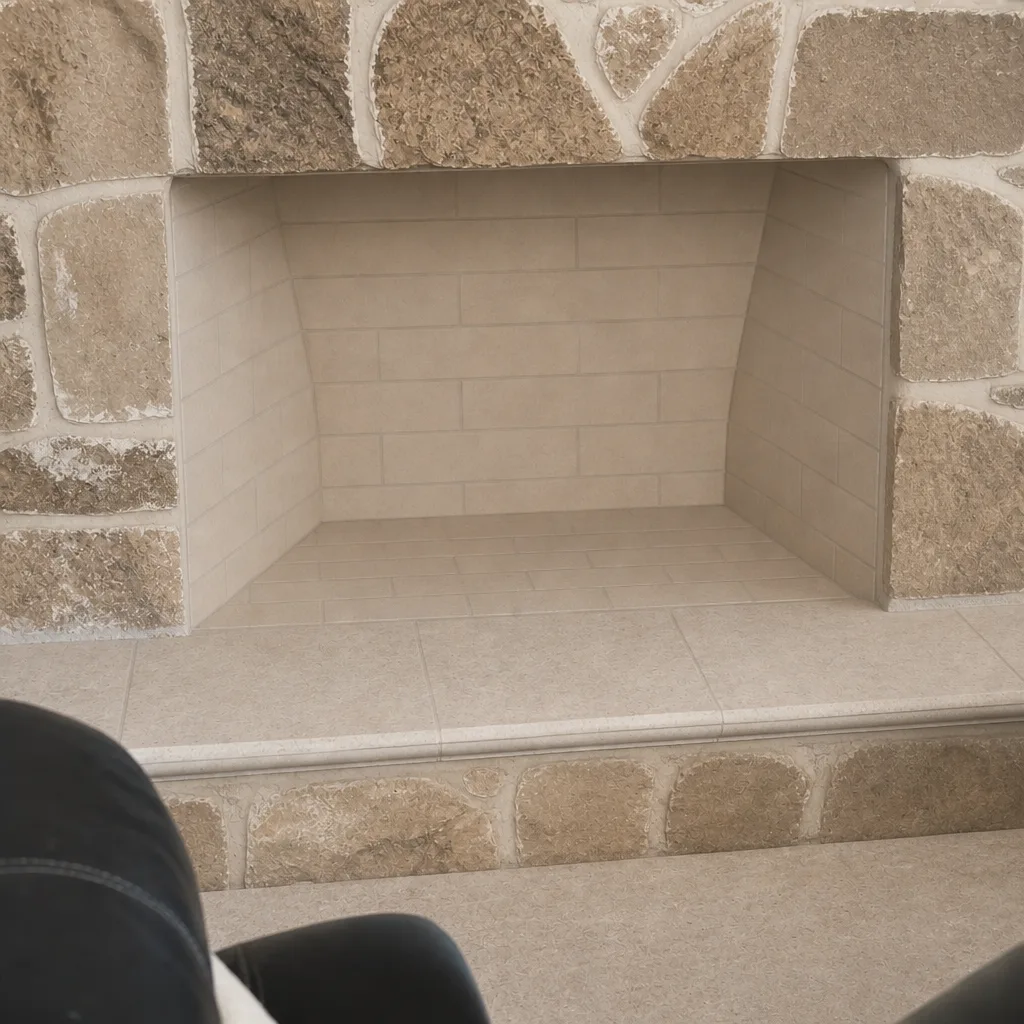 After
When to Call a Professional
Call a professional for any exterior staining or spalling, any smoky smell from the fireplace, a damper that won’t seal, soot or debris falling into the firebox, or a fire that smokes into the room. Call immediately if a carbon monoxide detector alarms. Don’t climb onto the roof to inspect a chimney yourself, and don’t open up a flue to look inside without the right equipment. A trained technician has a camera and a light and knows what a proper liner and crown should look like. Chimney Sweep Energy Corridor offers free estimates in Energy Corridor. Call (844) 625-7014. We answer 24/7. Fast dispatch from 7am to 7pm, Sunday through Friday.
Frequently Asked Questions
A smoky smell in summer, soot flakes falling into the firebox, and a fire that’s harder to light are the earliest signs a chimney needs cleaning. Exterior white staining is another early signal, and it points to moisture rather than creosote buildup. Any of these means an inspection is due. Call (844) 625-7014 for an exact quote – estimates are free.
The white staining itself isn’t dangerous, but it’s evidence that water is moving through your masonry, which over time damages mortar and brick. The danger is in the water pathway, not the stain. It needs an inspection to find the source, usually a crown, flashing, or cap failure. Call (844) 625-7014 to book an inspection.
Summer humidity is absorbed by creosote residue on the flue walls, and the moistened deposits release a smoky odor into the house. Winter, when the flue is warm and air is drier, the same residue stays relatively quiet. A sweep before burning season clears it. Call (844) 625-7014 for a quote.
Open the damper fully, then close it, and watch the plate above the fire. If it doesn’t seat flush, rattles, or won’t move through its full travel, it isn’t sealing. A stuck-open damper drives up air conditioning costs in Energy Corridor summers. Call (844) 625-7014 to have it evaluated.
Yes. When draft fails, combustion gases including carbon monoxide can spill back into the room instead of going up the flue, and this is called backdrafting. A blocked or damaged flue, a flue sized wrong for the appliance, or a tightly sealed house can all cause it. Call (844) 625-7014 for an inspection if you suspect a draft problem.
Once a year for a wood-burning chimney that gets regular seasonal use, with an inspection at the same time. Even a gas insert should be inspected annually, and stucco-clad chimneys especially benefit from an annual check because damage hides behind the coating. Call (844) 625-7014 for a free estimate.
The Bottom Line
Most of the chimney warning signs that matter are misread because they present as minor annoyances: white staining, a summer smell, a sluggish draft, a damper that doesn’t quite seal. Each one has a specific cause, and pairing symptom to cause is how you triage accurately instead of waiting for a failure. Exterior staining means water is moving through the masonry. A summer smell means creosote is saturated. Smoke during a fire means draft or blockage. A damper that won’t seat costs money on cooling. Carbon monoxide is the one signal you can’t see, which is why an annual inspection is the invisible safety net. Call (844) 625-7014 for a free estimate.
Written by the team at Chimney Sweep Energy Corridor.